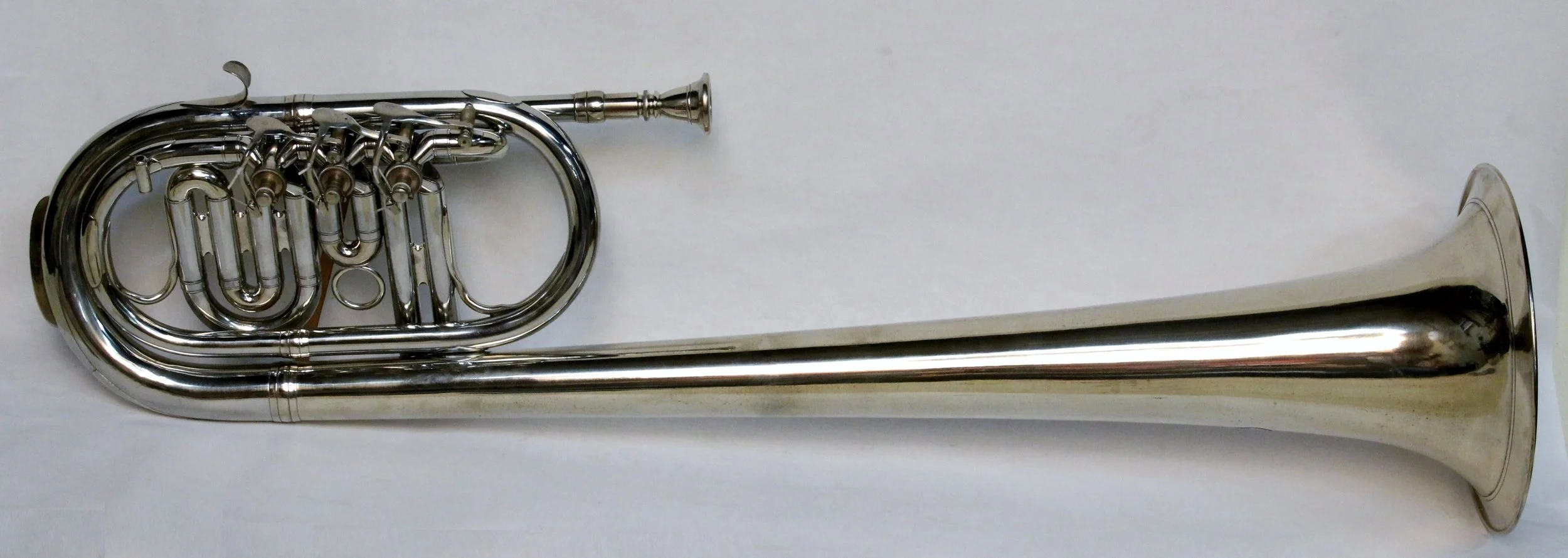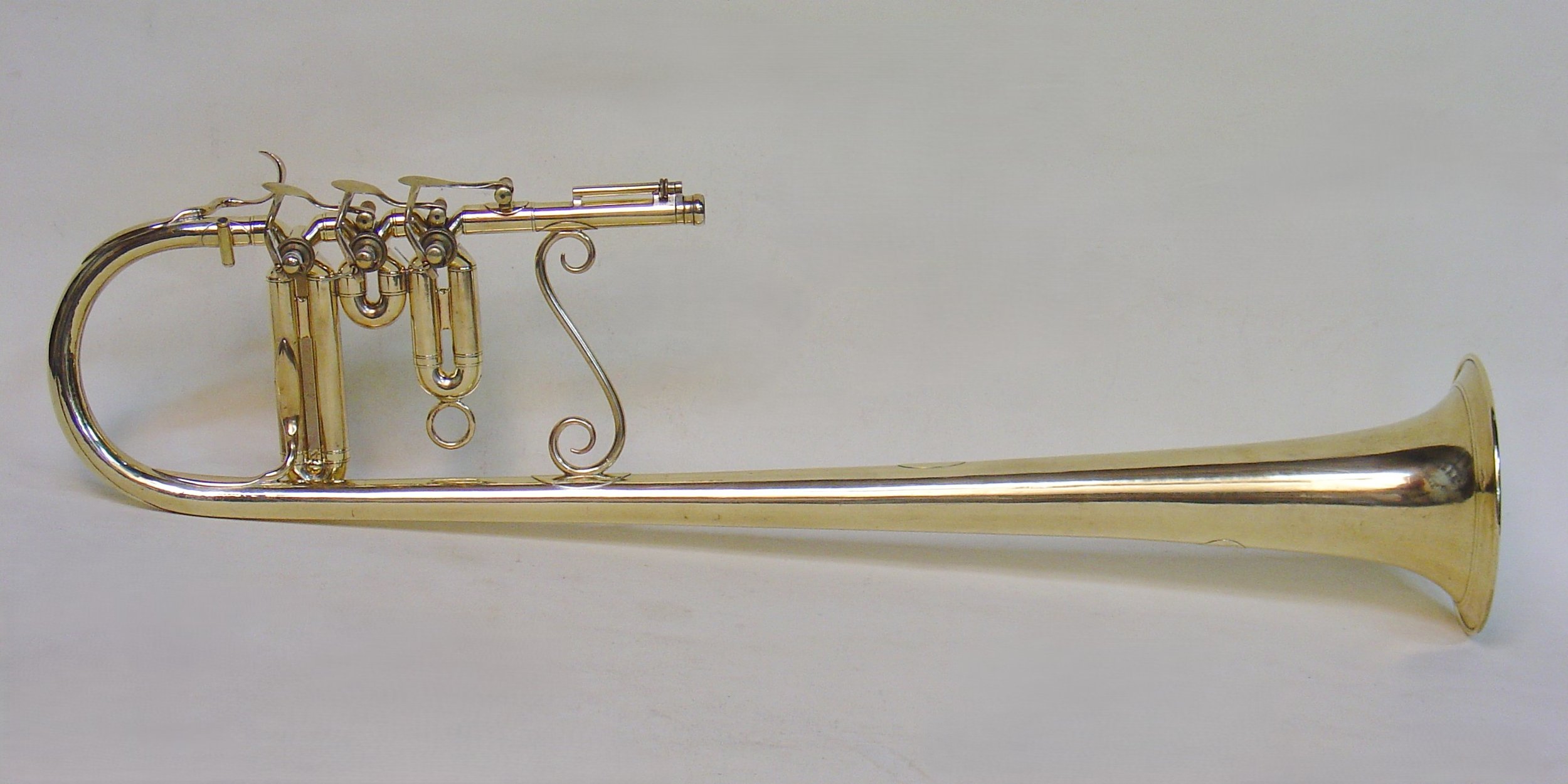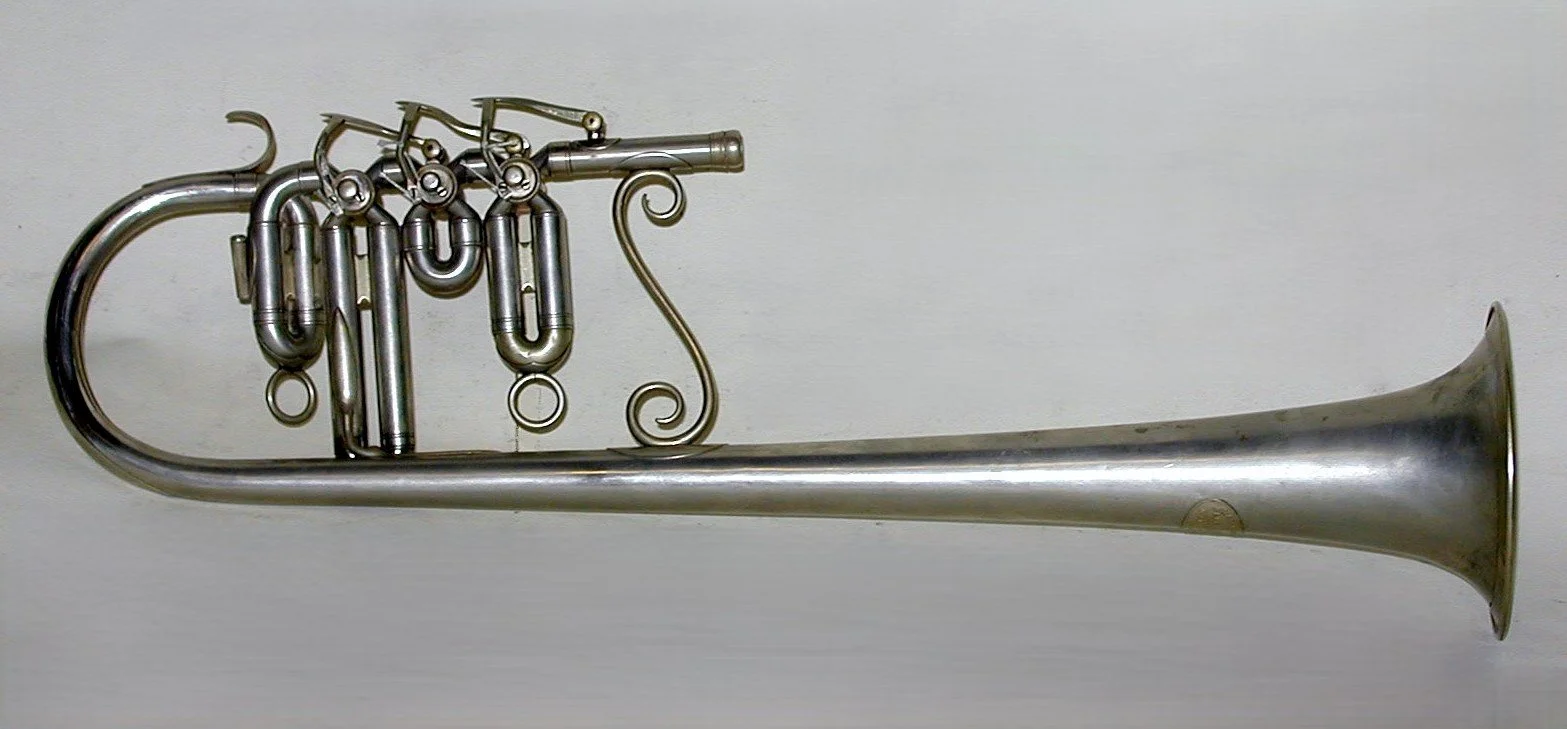
Joseph Lathrop Allen’s Life and Career
As with all other of the earliest brass instrument makers, many facts are missing from the record. The instruments that they made in the early years were soon considered out of date and most were discarded. We have little data to rely on to know the size of their production and examples of many instruments mentioned in advertising are not among the survivors. Dr. Robert Eliason published an excellent article on J. L. Allen in 1881 and only a small bit can be added to that record. The following is an attempt to add what has been learned, including later research that was given by him to the author by Eliason.
Joseph Lathrop Allen was born in Holland, Massachusetts on September 24, 1815 to Captain (also known as “Colonel”) Ezra Allen and Lucena Fuller Allen. J.L. moved to nearby Sturbridge in about 1838 and married Phebe S. Partridge on May 7, 1839. Only one instrument is known to be made by Allen in Sturbridge, an Eb keyed bugle of copper and brass with nine keys. It is very similar in design to those made by Henry Sibley, Graves & Co. and E. G. Wright. Fortunately, it is preserved in the collection of Old Sturbridge Village. Allen moved to Boston by 1842 and the only instrument known from this time is a Bb post horn with three double piston valves, again very similar to those by contemporary makers. Eliason presented an advertisement from The American Journal of Music and Musical Visitor by music store owner and publisher B. A. Burditt. It lists valve post horns, valve trumpets, trombones, ophiclydes (sic) and bugles.
Allen moved to Norwich, Connecticut in 1844 and formed a partnership with Lewis Raymond and rented rooms from him in his house. Little is known of Raymond other than he was born in Ashby, Massachusetts on December 15, 1816, and his father was a wagon maker there. He died just months after getting married in 1846. In order to purchase Raymond’s part of the business, Allen had to mortgage his tools and equipment to Boston publisher and music store owner, George P. Reed. During Raymond’s probate, an inventory of his own tools and materials was much larger than that of Allen, indicating that he had provided more capital to the partnership.
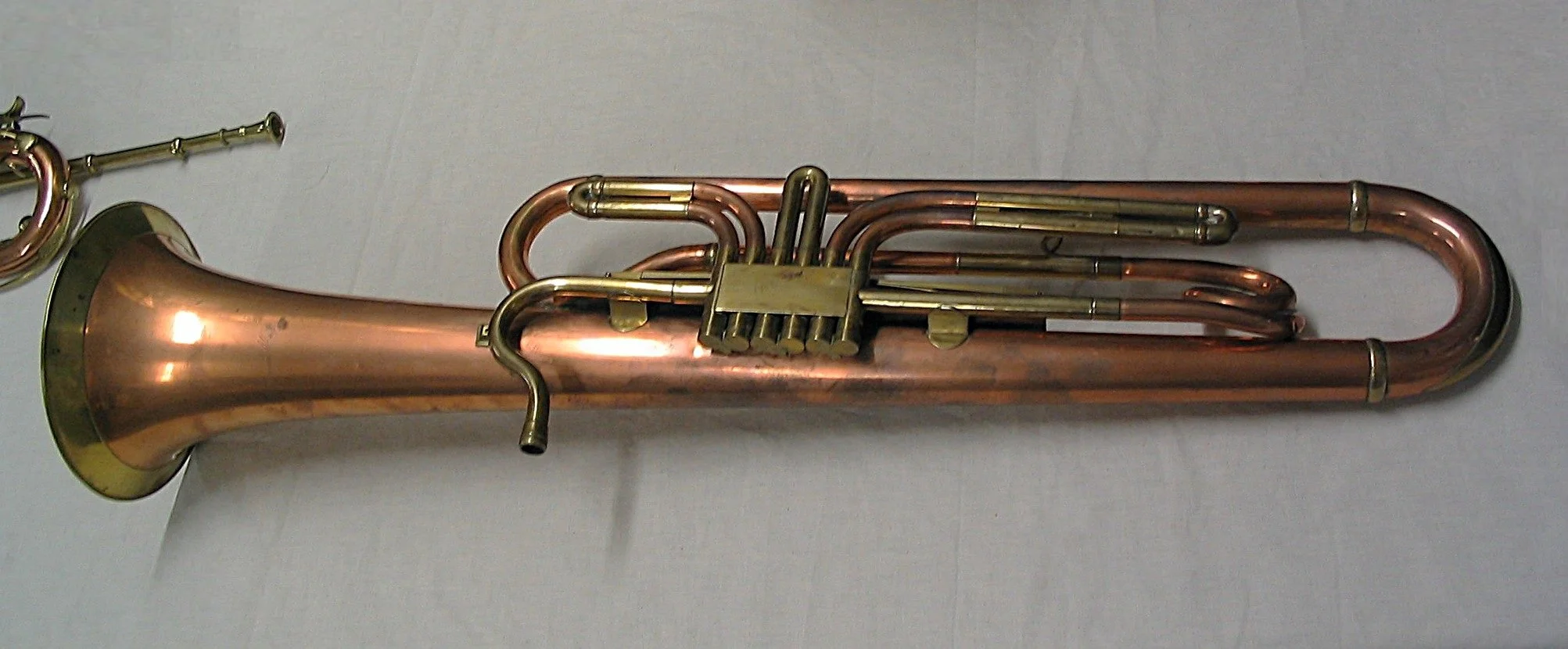
From this shop, two instruments are known to survive, a Bb post horn very similar to that from Boston, but with one key about five inches from the bell rim, and a tenor or baritone in C and Bb with three double piston valves. The baritone horn is in the same form as trombacellos made by Graves & Co., but larger bore throughout. Among the finished and unfinished parts listed in Lewis Raymond’s inventory were valves, crooks, slide tubes and bugle bells. Finished instruments listed were one each ophicleide in B and Eb, two trombones and one “Tuba”. The instrument name “tuba” was not seen in advertising and price lists of American makers in the second half of the 19th century, but is seen describing instruments made by Thomas Paine in Woonsocket, Rhode Island, E.G. Wright, Boston in 1845, and in H. B. Dodworth’s list of instruments for sale in New York, 1856. In the latter, it is clear by the context that they include the larger baritone range instruments, or basses in Bb and Ab and contrabasses in Eb and CC. The only context for the 1845 tubas is what little we actually know about brass instruments made in the US at that time, such as tenor and bass trombacellos, mostly by Graves & Co., a surviving German style tuba in F with five Berliner piston valves also made by Graves & Co. From the late 1830s the Germanic term “bass-tuba”, originally described contrabass instruments in F, very much like the instrument by Graves mentioned above. The author sees a likelihood that the tubas of Wright and Paine were baritone/bass and contrabass instruments with double piston valves and/or Berliner piston valves. They may have been similar to this baritone instrument by Allen that appears to be a trombacello until one looks more closely.
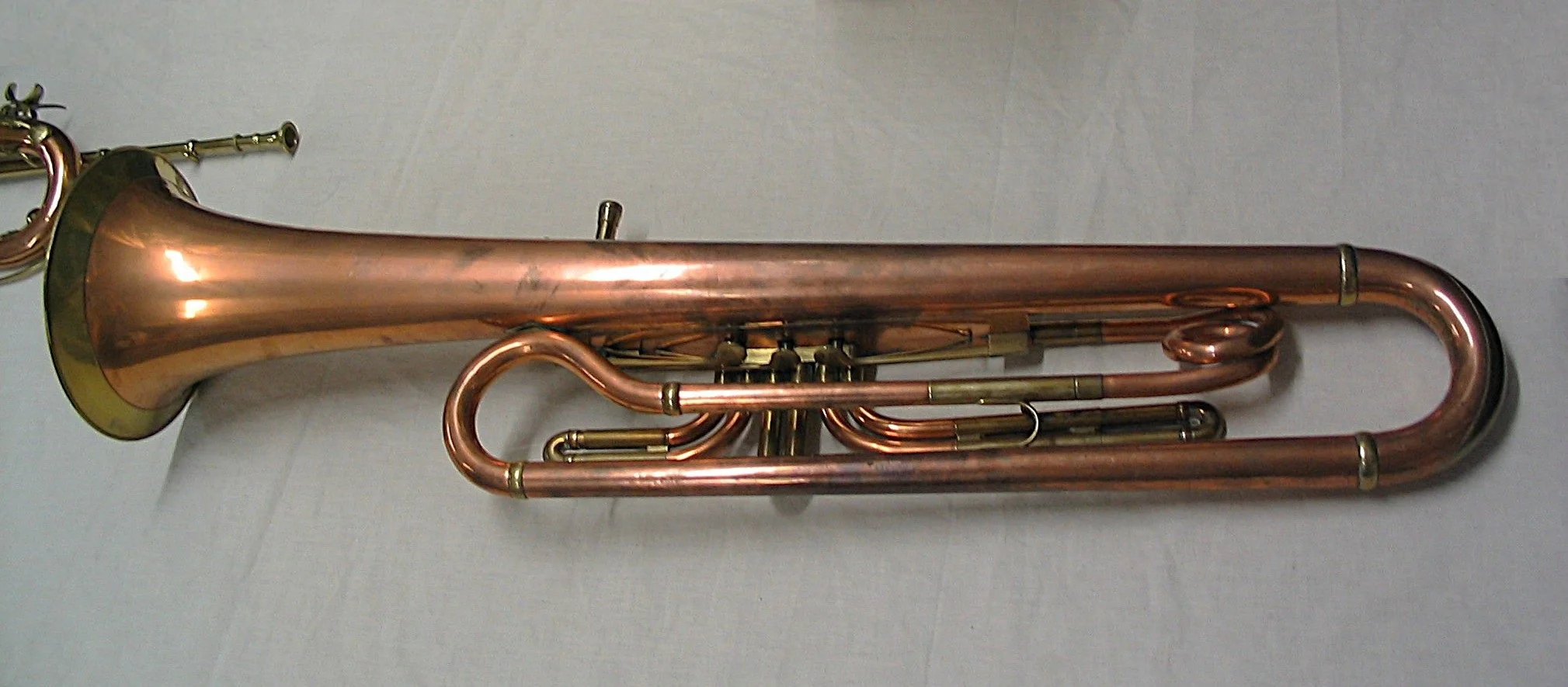
Starting sometime before the census of 1850, Louis Ferdinand Hartmann, a brass instrument maker from Markneukirchen, Saxony was living with Allen. Markneukirchen was Europe’s center for musical instrument making and Hartmann’s father was a member of the instrument maker’s guild there. According to Eliason, he first arrived in the US with his family in 1839, when he was 12 years old, but a few years later returned to Markneukirchen to learn more of the brass instrument making trade. He returned in August, 1848, listed in the ships log as “Instrumentmaker”. When Allen moved back to Boston in 1852, Hartmann continued to be part of the household including for the 1855 state census, but no longer in 1860. It was about 1850 that he designed his unique flat windway rotary valves, today known as “Allen valves”. Hartmann was likely instrumental in being able to produce these valves.
Allen was briefly in partnership with Benjamin Franklin Richardson in 1852, but more importantly, he hired more German trained makers in the subsequent years. Those include Henry Esbach, who initially arrived in 1847 as a “mechanic”, travelled back to Germany and returned on September 4, 1850 as “instrumentmacher”. Also, Franz Huttl, who arrived in New York on April 7, 1854, and his brothers Anton and Erhardt and Joseph Koestler, who arrived together on June 29, 1854, all listed as “Instrumentmaker”. Also working with them was August Doelling, who had arrived on June 1, 1854. By 1858, he was using the business name “Allen Manufacturing Company”, having previously engraved his instruments either “J. Lathrop Allen, Maker”, “Manufactured by J. Lathrop Allen” or simply “Allen & Co.”.