
E.G. Wright Bb Cornet, early 1860s

Once again, the restoration work here is quite ordinary, but I am compelled to share this instrument because of its historical importance . Even as one of the world's great brass instrument makers, Wright is over represented on this web site, but for those of you that savor the work of the best early US makers, you will dig this one from the collection of Nick Rail.


This appears to be among the earliest of his instruments with side action valve levers. The fact that the levers are narrow compared with later instruments with this mechanism, make me think that they had been ground down in a previous repair. After careful restoration, I now believe that they are an earlier design than we see in his more familiar work. He likely redesigned them to the wider form to make them more easily under the fingers of the player, perhaps responding to complaints. This side action lever with string linkage seems to have originated with J. Lathrop Allen no later than 1856. In Allen’s instruments, the earliest levers are a bit narrower, getting wider about 1860 or so.
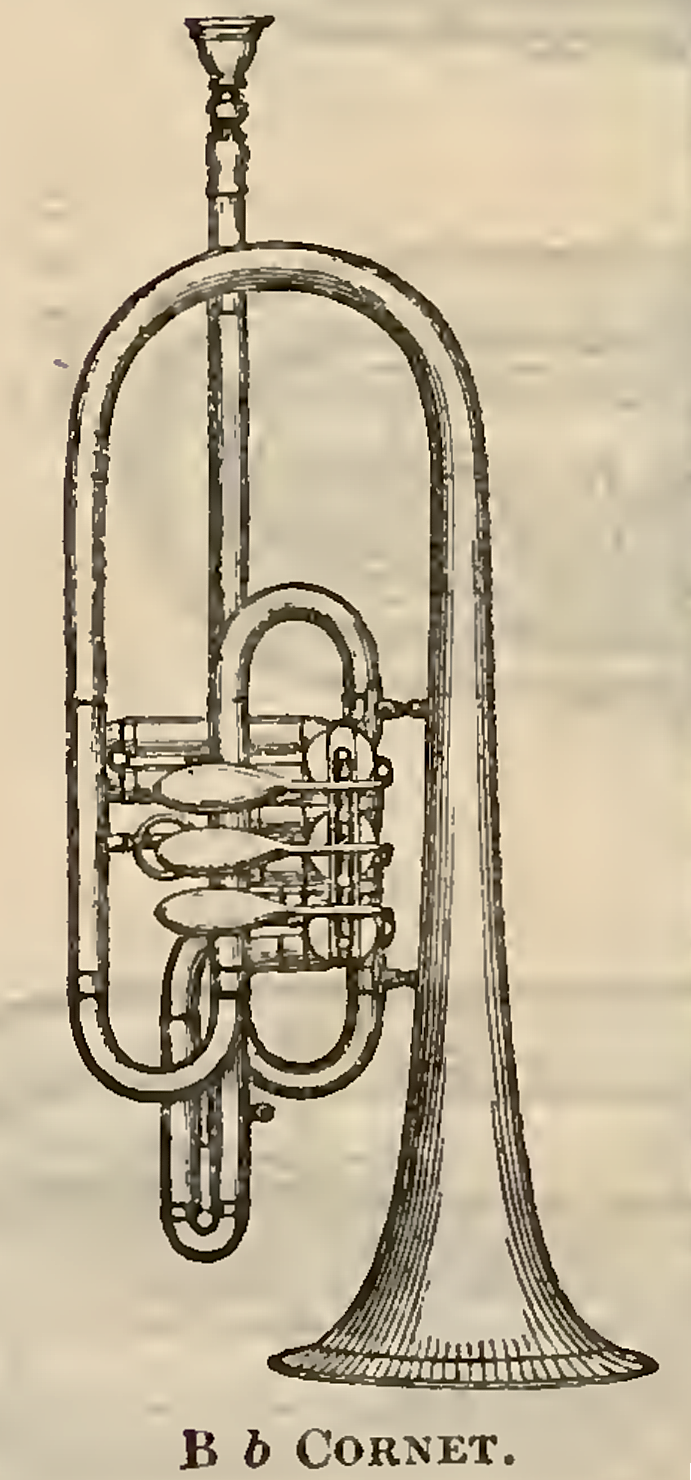
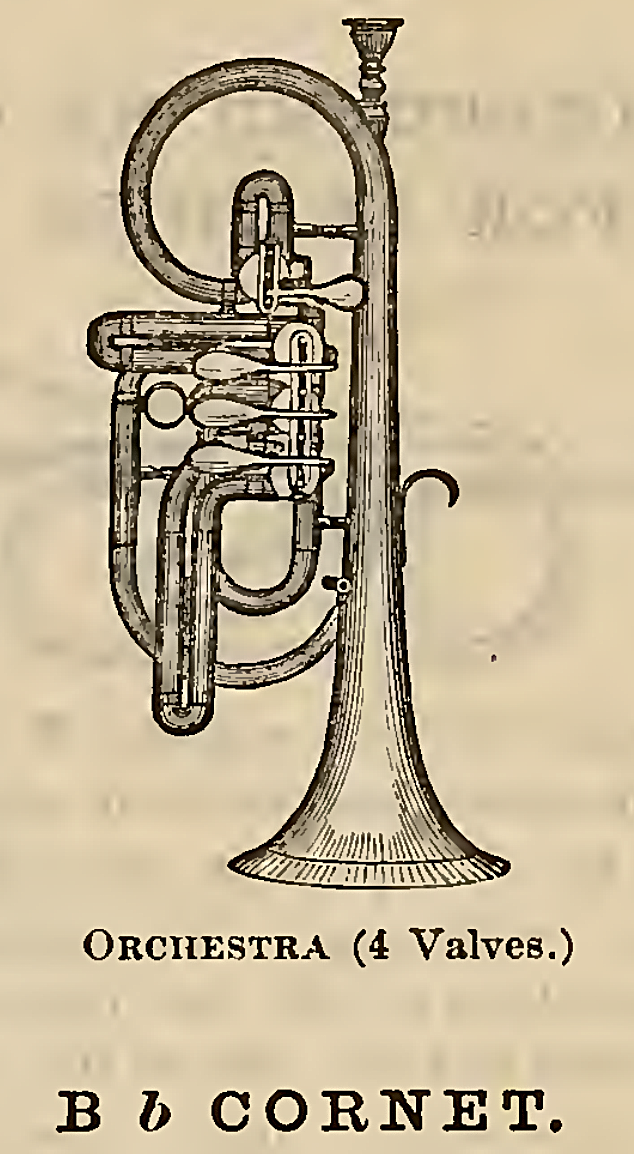
In the image below I show a portion of a price list published by Wright in the 1860s (courtesy of Steve Ward collection). It is undated, but gives an address where Wright had his shop from 1860 to 1866. I believe that it is from before 1865 which is the approximate year that he started making the newer design Bb cornet in which the bell curves 270 degrees rather than 180 degrees as seen in this one. In this damaged but readable ad, you can clearly see a Bb cornet illustrated which is very much like this although has the wider valve levers seen on later Wright cornets and all the Boston Band Model cornets with side action valves. The same cornet design, apparently the same engraving, was pictured at the back of the Boston Musical Instrument Manufactory’s catalog published in 1869. At pride of place, towards the front of the catalog is the later Bb cornet design, the same engraving that was used in Wright’s advertising by 1866. No examples of the earlier design, signed by Boston, are known to have survived.

There are a few other features in this cornet that point to it being early. One is the decorative turnings on the braces which becomes slightly simplified in later instruments. Another is not visible in the photos, but the valve bearings that are under the lever carriage are open and have alignment marks on them. These marks are not visible in this design, so a very short time later, Wright would solder caps over these bearing ends and put the alignment marks on the tops of the stop pins (where the corks hit) on the opposite side. Those later alignment marks are not present on this instrument, making accurate alignment difficult.
This cornet is 13 5/16" long, the bell rim diameter is 4 5/8" and the bore size is .459". The standard bore size for later Wright and then early Boston cornets became .462". Neither mouthpieces shown are original, the first was found with it, the second is a Fiske from the period.


Most of the effort involved in this restoration was in the dent removal and although quite battered the brass was mostly sound. It required just two patches on seams that had split. The first valve lever had been repaired and was secure and functional, but needed a brass strip added to blend it in cosmetically. Then two stop arm retaining screws and pull knobs for the first and third valve slides were made to complete the instrument.