Robinson and Bussell’s Albert Valve, British Valve and Serpentine Valve Cornopeans


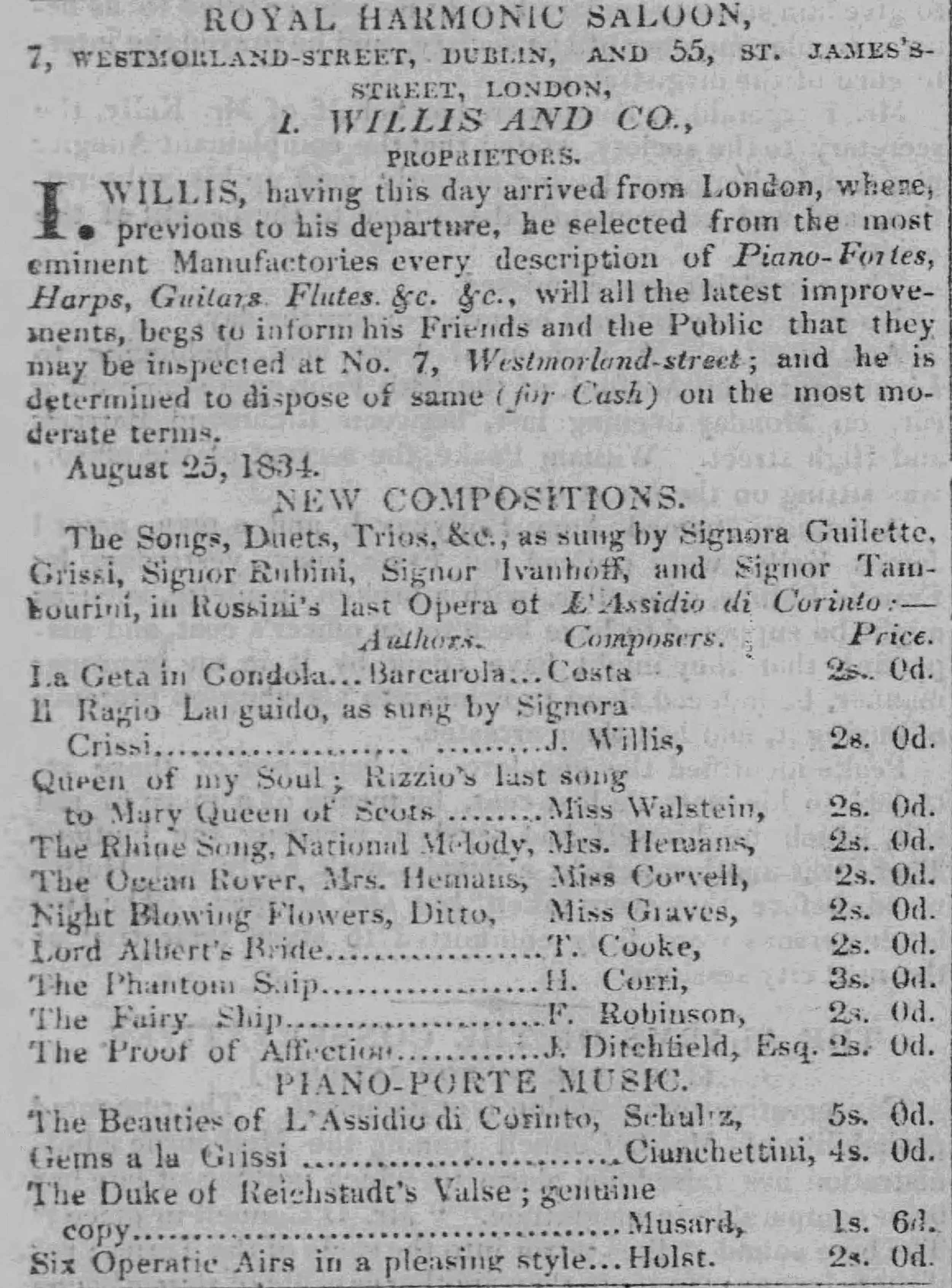
The partnership of Robinson, Bussell and Robinson was first formed when they succeeded Isaac Willis’ “Harmonic Saloon” (sometimes called the “Royal Harmonic Saloon”), at 7 Westmorland Place, Dublin in 1836. The focus of the business was pianos and sheet music, but they dealt in all instruments for which there was demand. The original partnership was Francis Robinson, Henry Bussell and William Robinson. They appear to have successfully continued the business as Willis had established.


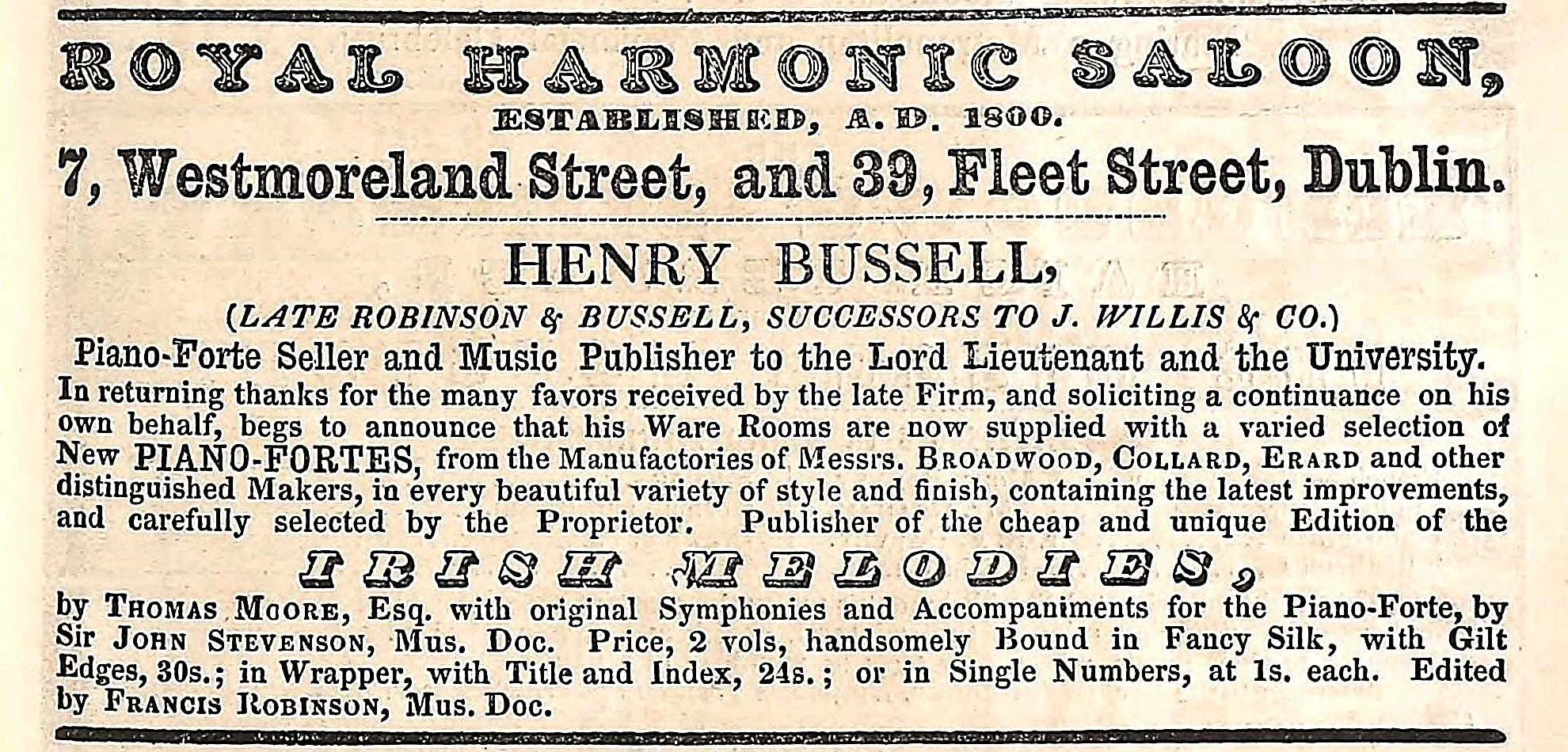
In about 1841, the partnership’s name was shortened to “Robinson and Bussell”. Perhaps it was always a family business, and younger brother Joseph Robinson was also involved in the business and possibly John as well. The four Robinson brothers, Henry Bussell and at least two of the Robinson’s wives were highly active in the highest echelon of Dublin’s music culture. They all played piano and organ and sang in both church and concert hall. Francis achieved Doctor of Music around 1860 and commissioned a large house built, named “Undercliffe”, in the wealthy Killiney suburb of Dublin. He was a friend of Thomas Moore and Sir John Stevenson and became a vicar choral and organist at St. Patrick’s Cathedral as Stevenson had earlier in the century. By 1853, Henry Bussell was the sole named owner of the Royal Harmonic Saloon. He was also very active as secretary of the Philharmonic Society, performed on piano and served as conductor in many concerts.


Only two instruments known to survive that Robinson and Bussell signed, along with a third (the first made) that the designer of all three, Robert Bradshaw, signed. I attempt to clarify the facts here, but the story is surprisingly complicated, and many facts remain to be discovered. While the three cornets share a similar concept, a lucky twist of fate makes them examples of three different designs, which their makers registered in three different years under the Design Act of 1843 in London. This act of Parliament allowed makers to register and protect designs for three years at a much lower cost than filing for a patent. Robert Bradshaw, a clock and watch maker at 36 Lower Ormand Quay in Dublin, designed—and possibly made—the instruments. According to city directories, he had established his timepiece business in Dublin by 1822, although from 1844 to at least 1859, city directories described him as a “musical instrument maker.” He must have produced only a small number of instruments, since researchers and collectors have found no others bearing either his own name or that of Robinson and Bussell. In a number of newspaper advertisements beginning in October 1838, Robinson and Bussell claimed that they made “Military Musical Instruments.” In their first advertisement, they stated that they had “purchased from Mr. ELLARD his entire Stock of Tools, Models, Patterns, and Machinery.” “Mr. ELLARD” clearly refers to Andrew Ellard, who remained active as a maker until 1838. Rather than quote more of this very long advertisement, I present it below in its entirety. The advertisement makes interesting reading, although a reader may find some of it difficult to interpret, perhaps because the author lacked thorough familiarity with brass instruments. It is equally possible that people in Dublin used these descriptions at the time. The term “Best Russian Valve” does not correspond to valve types that makers used during that era, except in a trumpet method book that Thomas Harper Sr. published in 1835. In that book, Harper uses the term “Russian valve” in the caption of an illustration of a trumpet with two Stölzel valves. Ed Tarr speculated that it was a misprint of the term “Prussian valves,” since inventors first developed these valves in Prussia. Robinson and Bussell likely knew this book.


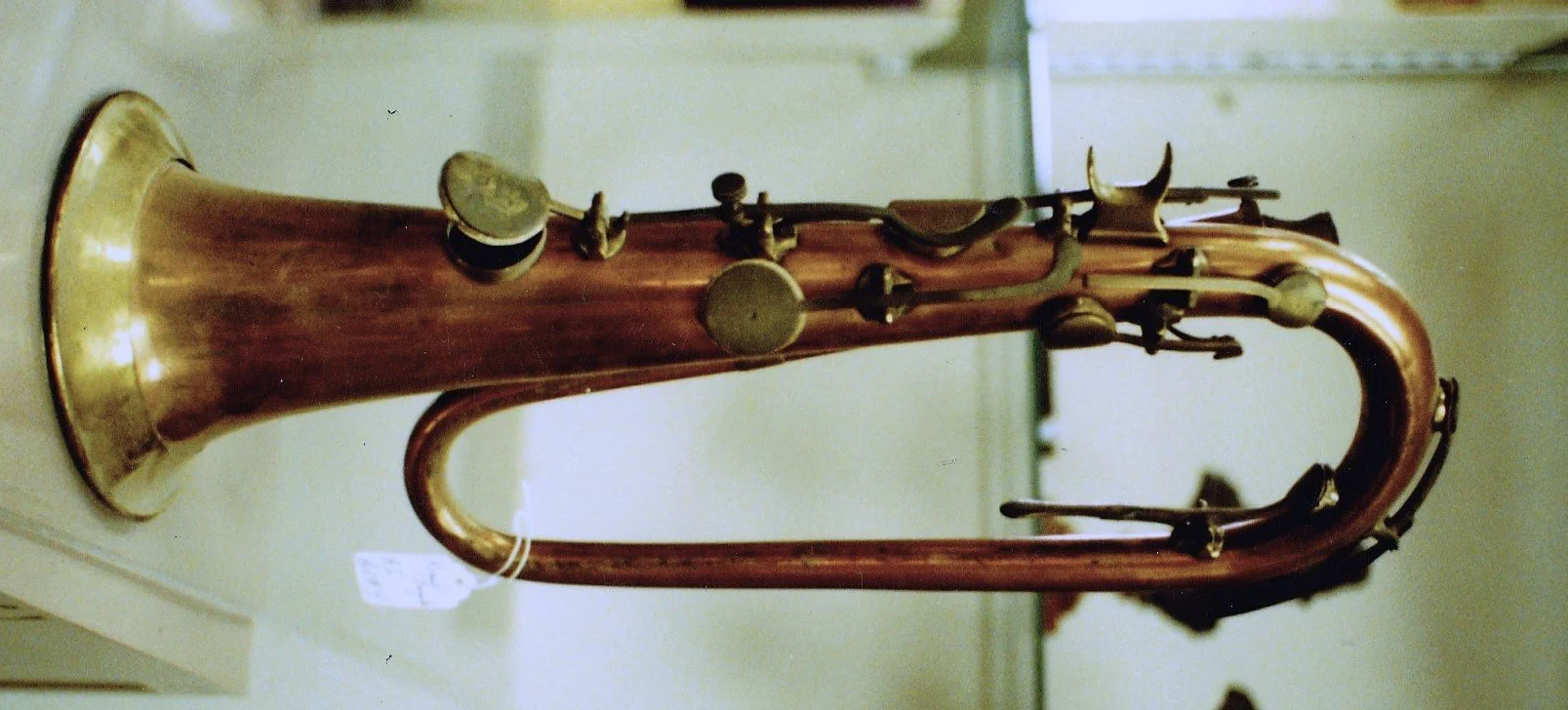
Ellard had taken over marketing keyed bugles from Johann Bernhard Logier in 1818. Only one keyed bugle is known by Logier. Much more information on the earliest keyed bugles is found in Ralph Dudgeon’s “The Keyed Bugle”. It is hard to imagine that a maker as small as Ellard, with so few surviving instruments, produced such a wide variety of instruments. Perhaps Ellard imported some instruments from other makers. Fewer than ten surviving instruments bear Ellard’s signature, including flageolets, keyed bugles, a serpent, a horn, and a flute. The image below shows a seven-keyed bugle with a tuning mouthpipe. The curved key cups of the flaps may match what Robinson, Bussell and Robinson described as “crescent keys” in their advertisement cited above.


It doesn’t seem that Andrew Ellard continued in the musical instrument business after 1838, but he was listed as living at 10 Tritonville, Irishtown, with Robert Bradshaw in the early 1850s and then a few doors down in 1856. When mentioned in the press, he was titled “Esq.”, mostly as a member of grand juries and on the committee to determine grand jury rates. Bradshaw continued to be listed as musical instrument maker in the Dublin directories until 1859, but was insolvent in 1852 and there is no other evidence of his activities after 1850.
Andrew Ellard does not appear to have continued in the musical instrument business after 1838. In the early 1850s, records list him living at 10 Tritonville, Irishtown, with Robert Bradshaw, and in 1856 he lived a few doors away. The press referred to him as “Esq.” and most often mentioned him in connection with his service on grand juries and on the committee that determined grand jury rates.
Robert Bradshaw continued to appear in the Dublin directories as a musical instrument maker until 1859. However, he became insolvent in 1852, and no other evidence documents his activities after 1850.
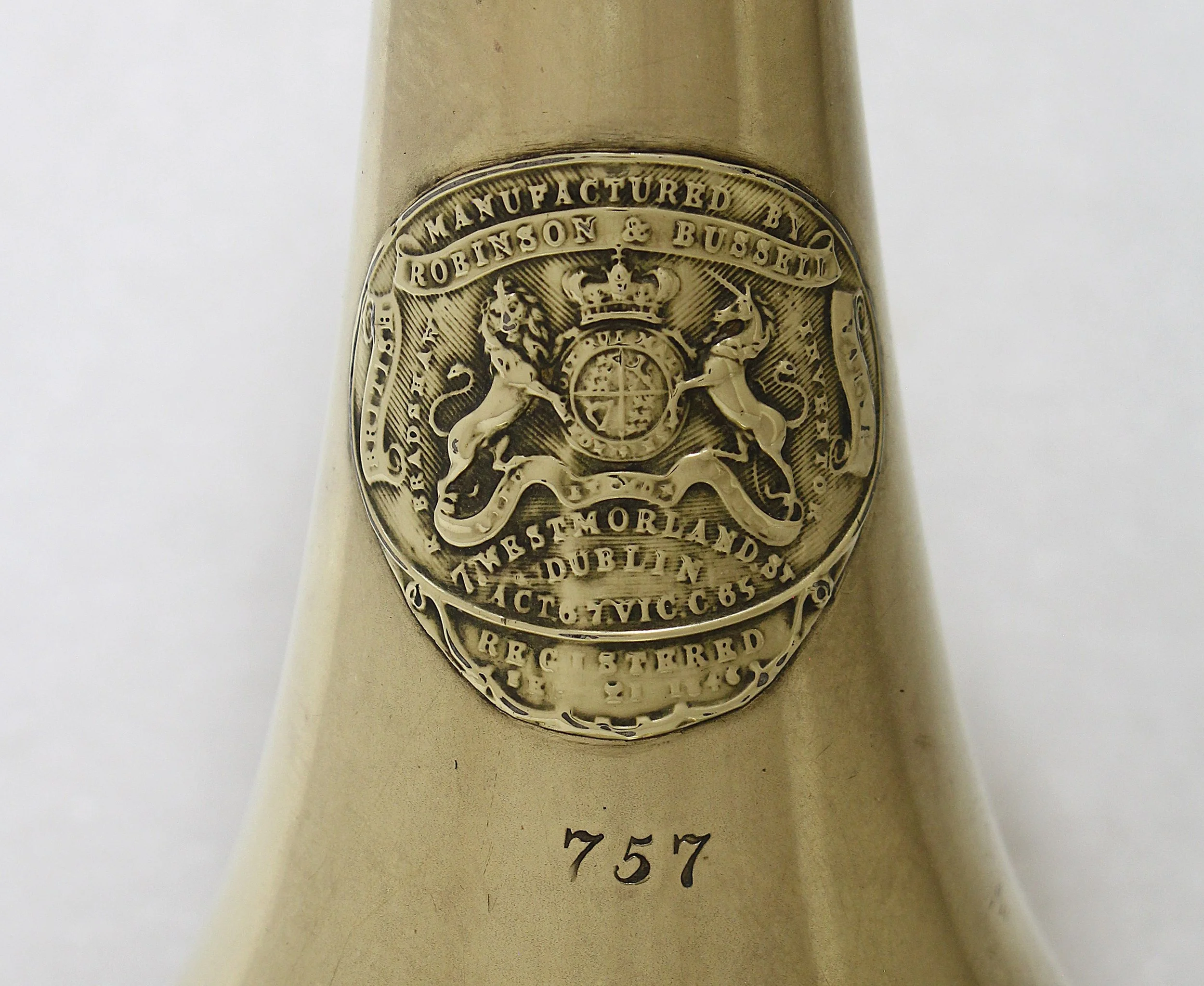
Robert Bradshaw registered his first cornet design on April 7, 1845, under the title “The Albert Valve for Cornet-Pistons, Trombones, Ophicleides, etc.” He likely chose the name to honor Prince Albert, although no source states this explicitly. Only one known example of this design survives, and it forms part of the collection at the Brussels Musical Instrument Museum. Géry Dumoulin, curator of this collection, described this cornet in an article published in the Historical Brass Society Journal (2002 page 429). Further research must determine whether Bradshaw also patented this design, as the engraving on the bell of the cornet claims; however, the engraved date matches the registered design. The design aimed to remove the bore restrictions in the tubes that passed through the pistons, and it achieved this goal, at least the valve slides engaged. Each piston has an internal 180-degree curve that is engaged when the valve stands in the up position, and the maker presumably designed this curve without any internal restriction.
The design placed all the tubing through the valves in the same plane, following the same concept used in a Berliner piston or rotary valve. In both of those systems, makers could achieve the same result by enlarging the valve bodies. A few makers adopted this approach, but it never gained the popularity of the more compact versions because the larger, heavier valves responded more slowly. In the Albert valves, the maker reduced the size of the pistons by shaping them oblong. Géry Dumoulin reports that the valves do not seal tightly enough to make the instrument suitable for performance. Given the excellent state of preservation and the known difficulty of fitting irregularly shaped valves, the evidence suggests that the cornet may never have functioned satisfactorily.
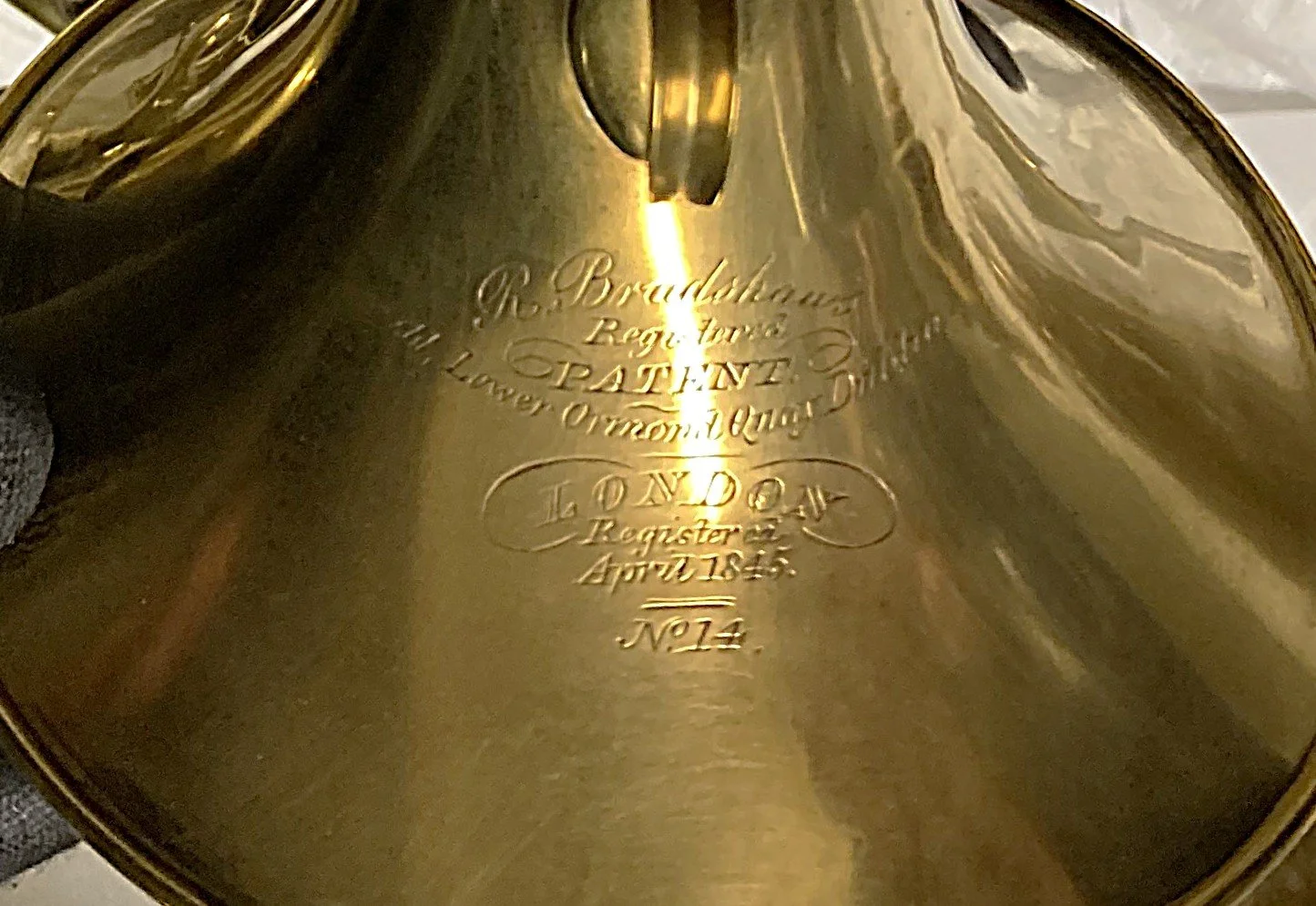
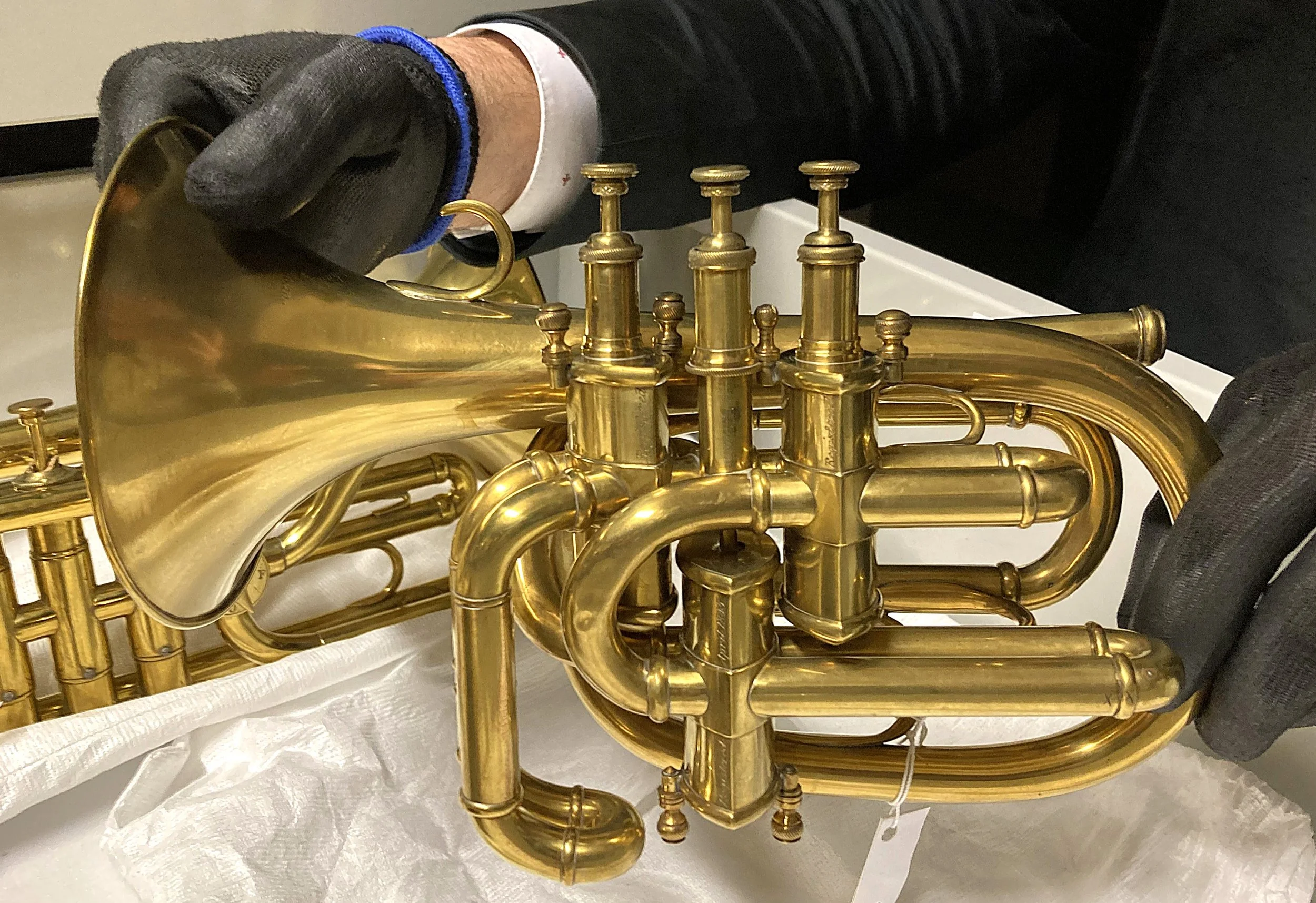
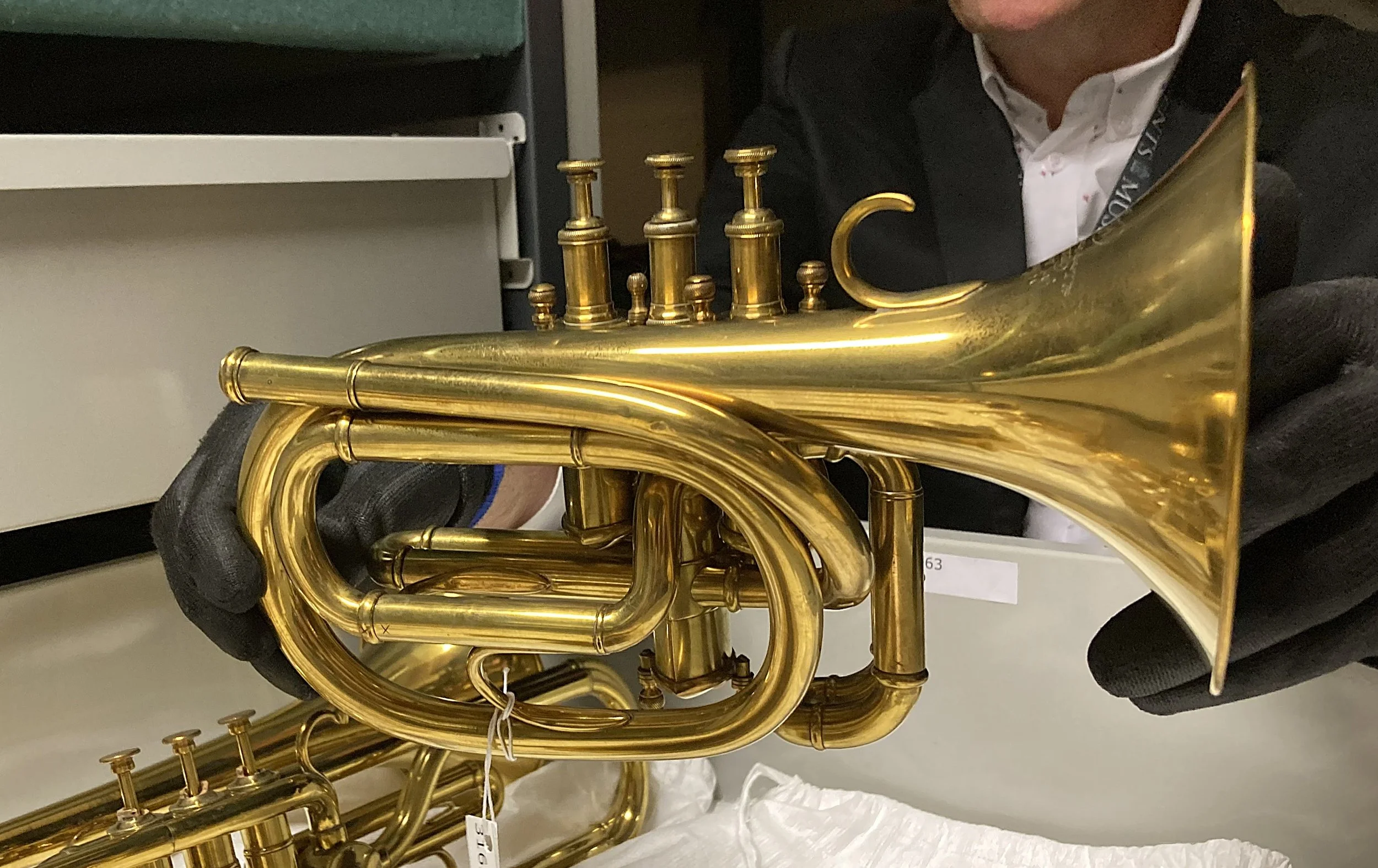
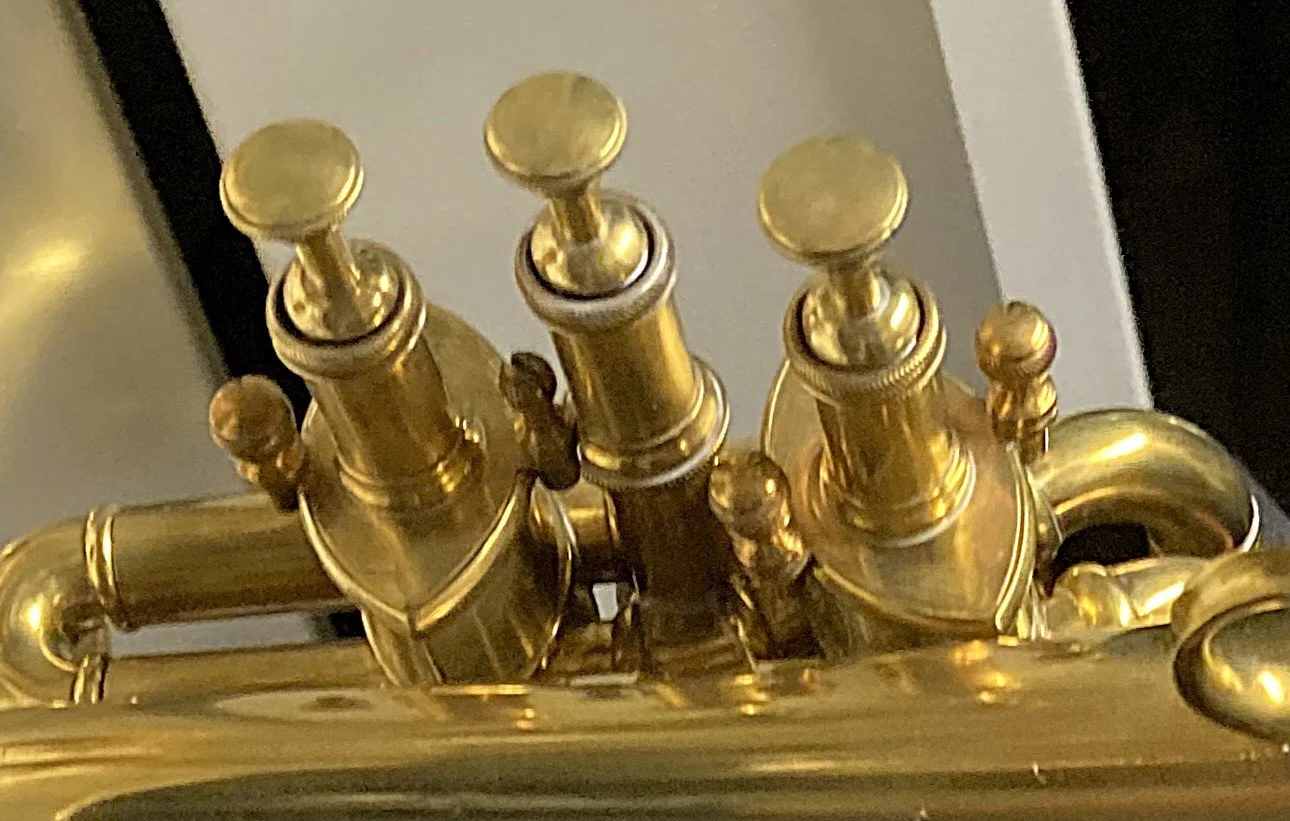
Steve Ward’s collection includes the next of these cornets, which reflects a design registered on August 21, 1846. Robinson and Bussell registered the design under the name “Bradshaw’s British Valve,” but they clearly attributed it to Bradshaw.
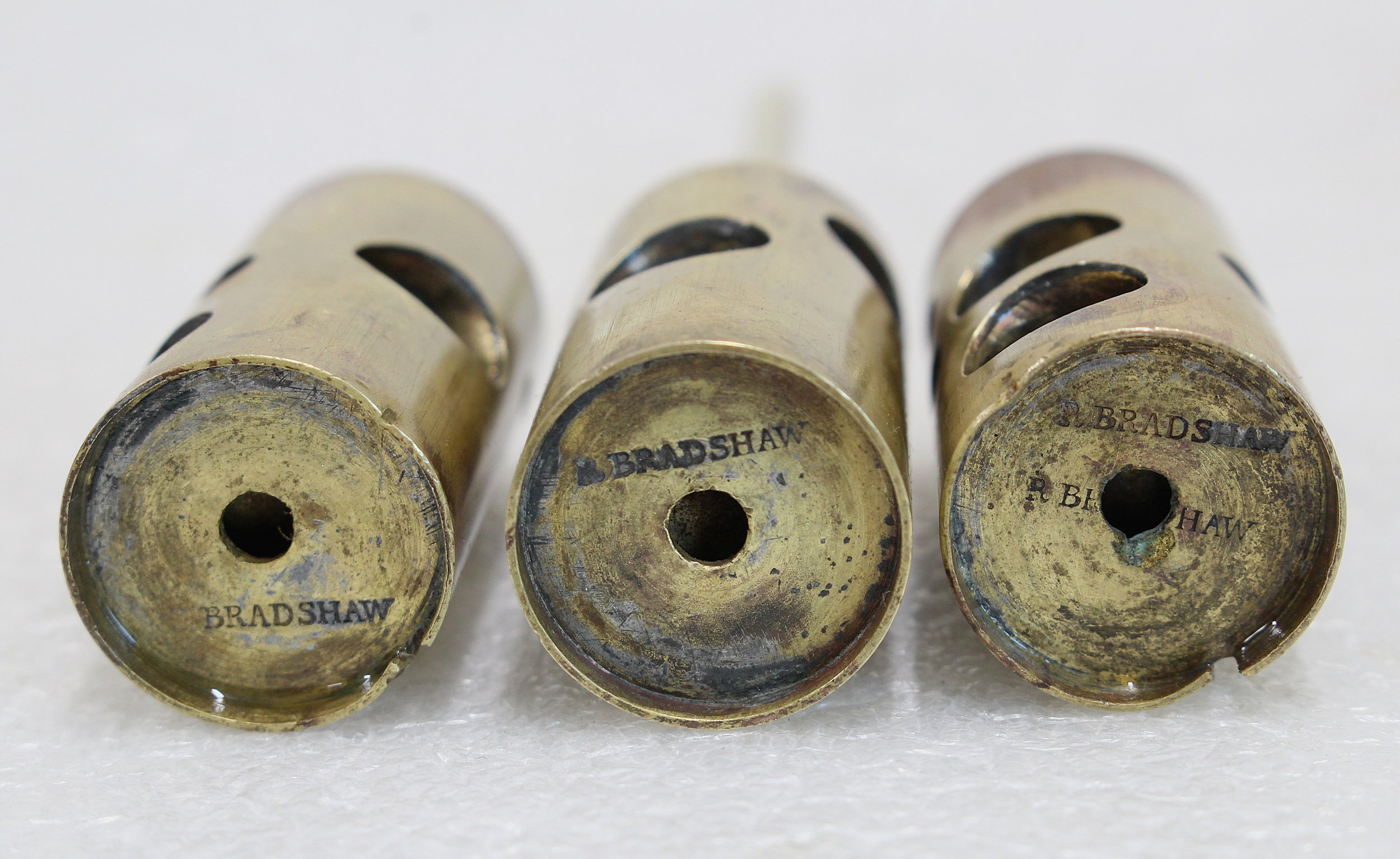
This cornet follows the same overall design as the earlier example with Albert valves, except for a modification to the valves themselves. Bradshaw combined his earlier concept with the principle of Perinet valves, which placed the tubes through the pistons at different vertical levels. This arrangement allowed for smaller piston diameters but allowed enough space for the return curve within the piston to be full bore. As a result, the design produced pistons with the same diameter as Berliner valves of the same bore size, but without bore restrictions. This cornet remains well preserved and functions as a very good playing instrument. In both the Albert and British valve cornets, Bradshaw placed the half step in the first valve; however, in the British valve model, he made the longer whole-step slide assembly interchangeable with the half-step slide.
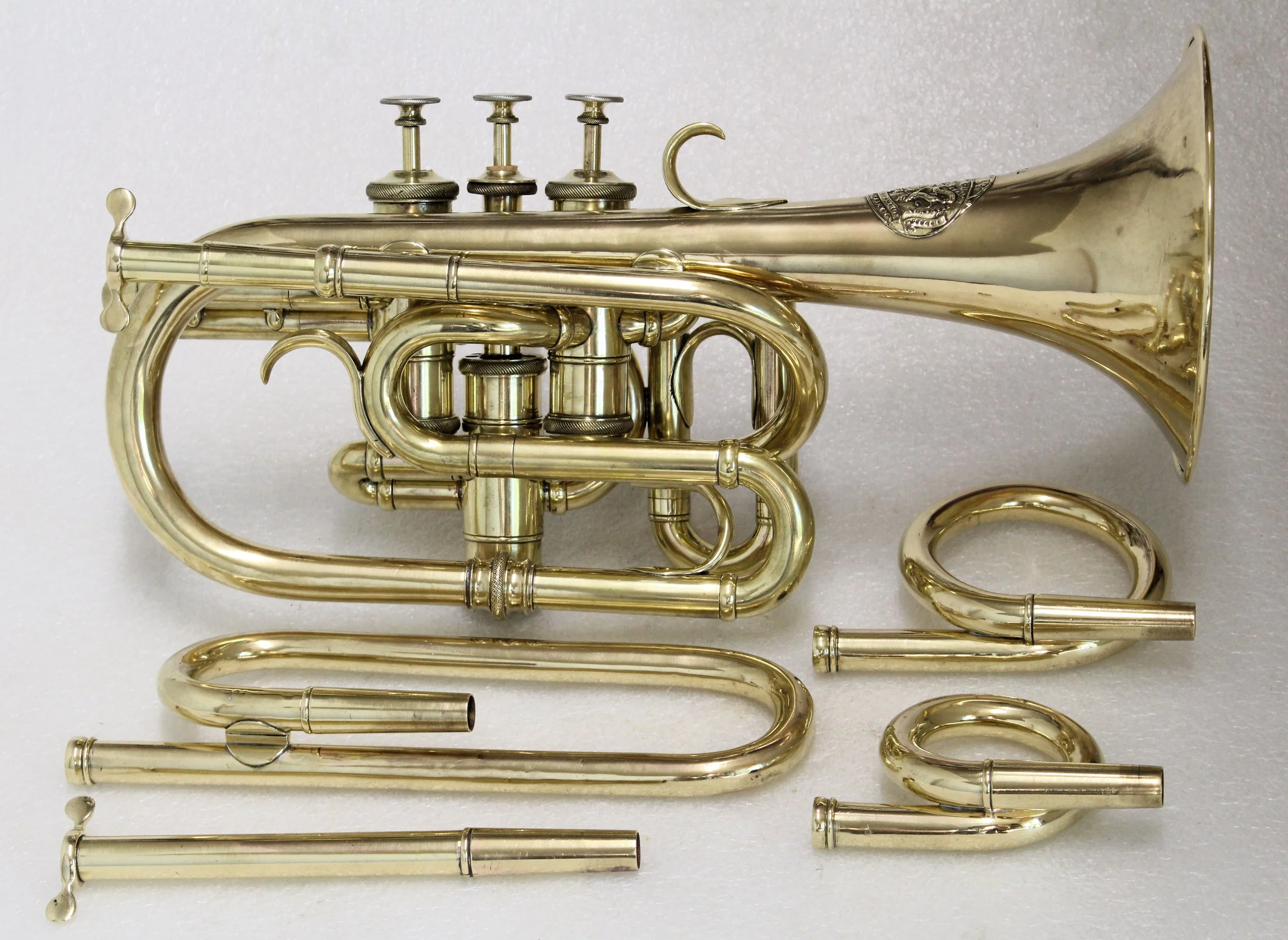
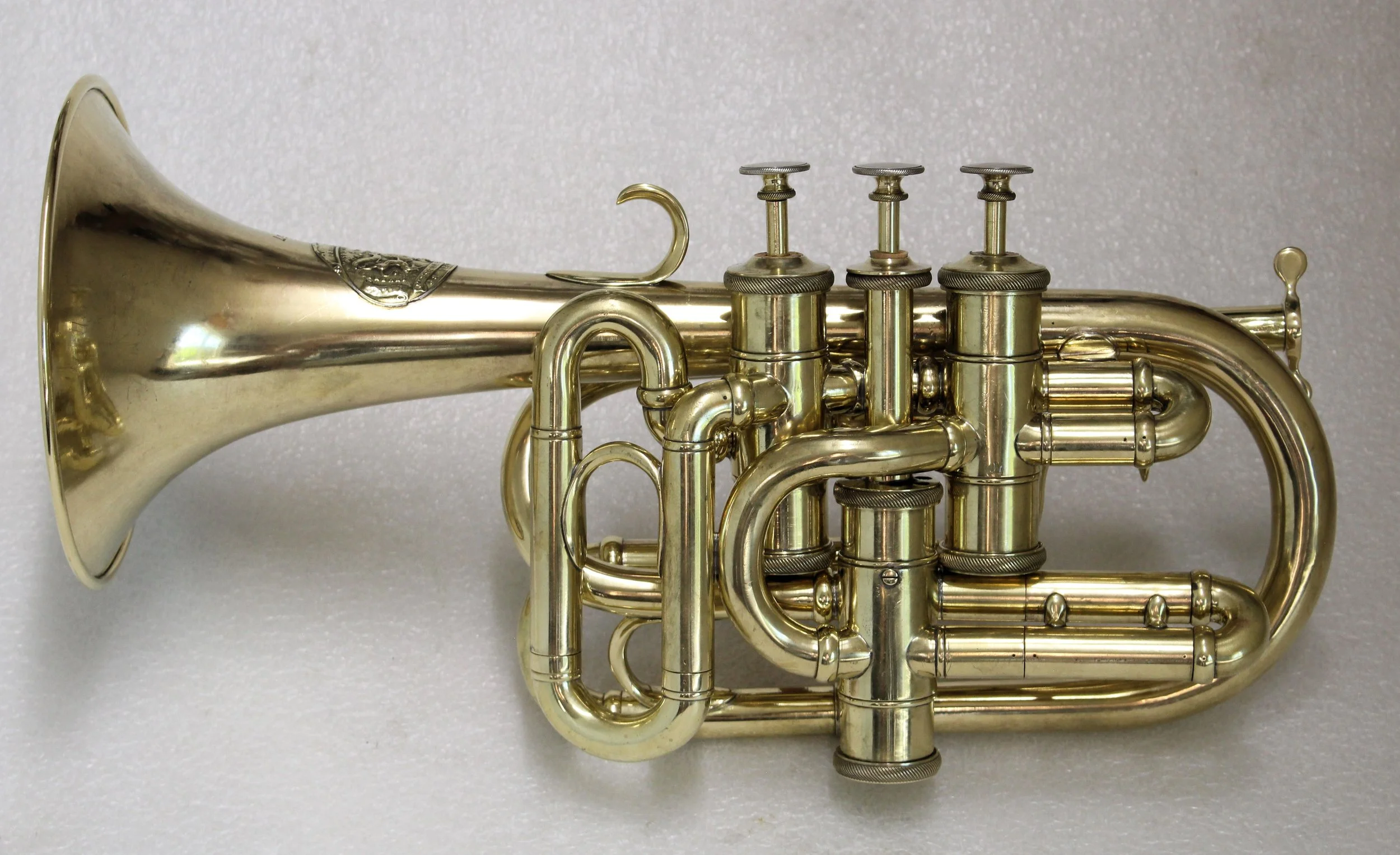
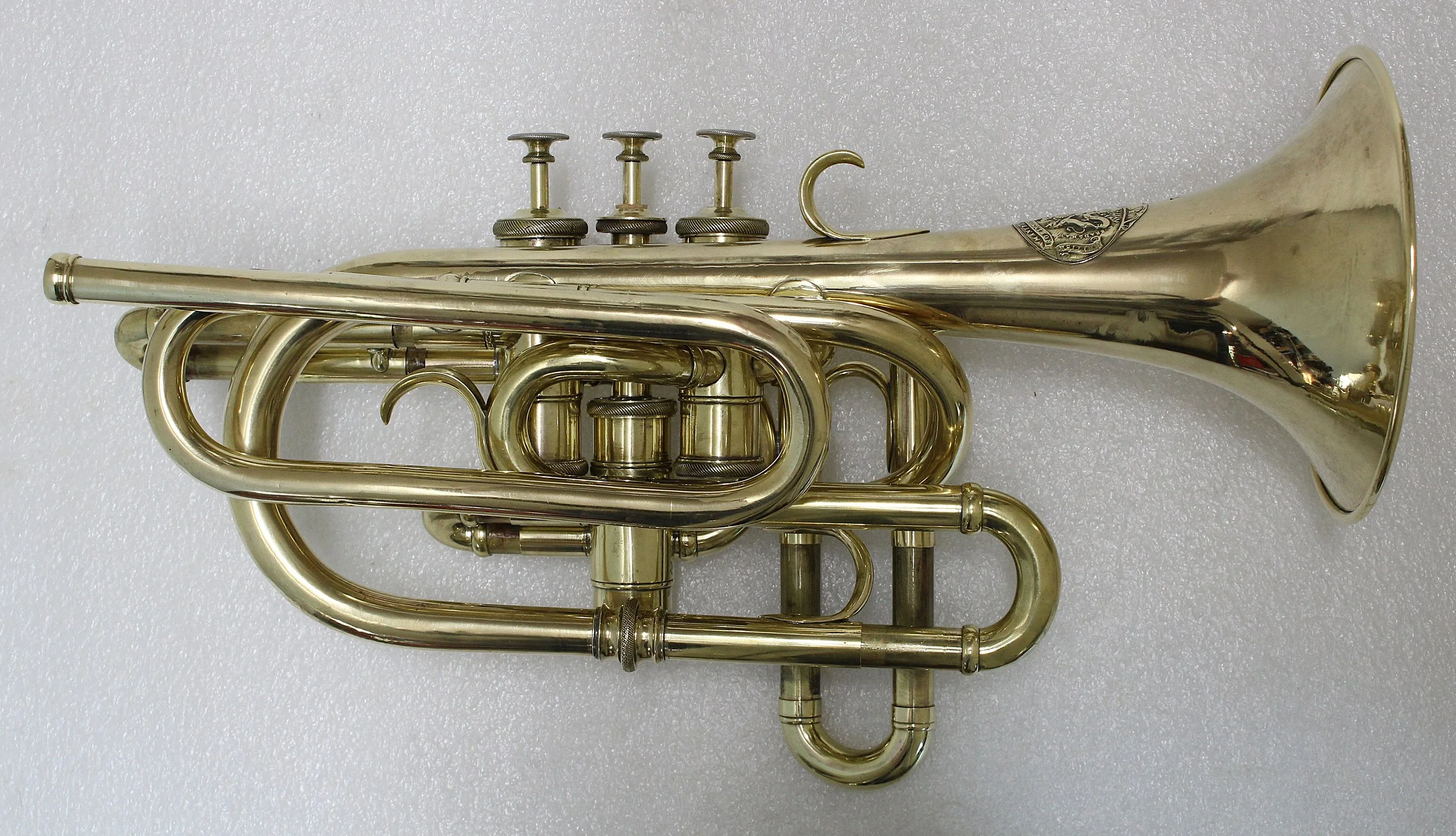
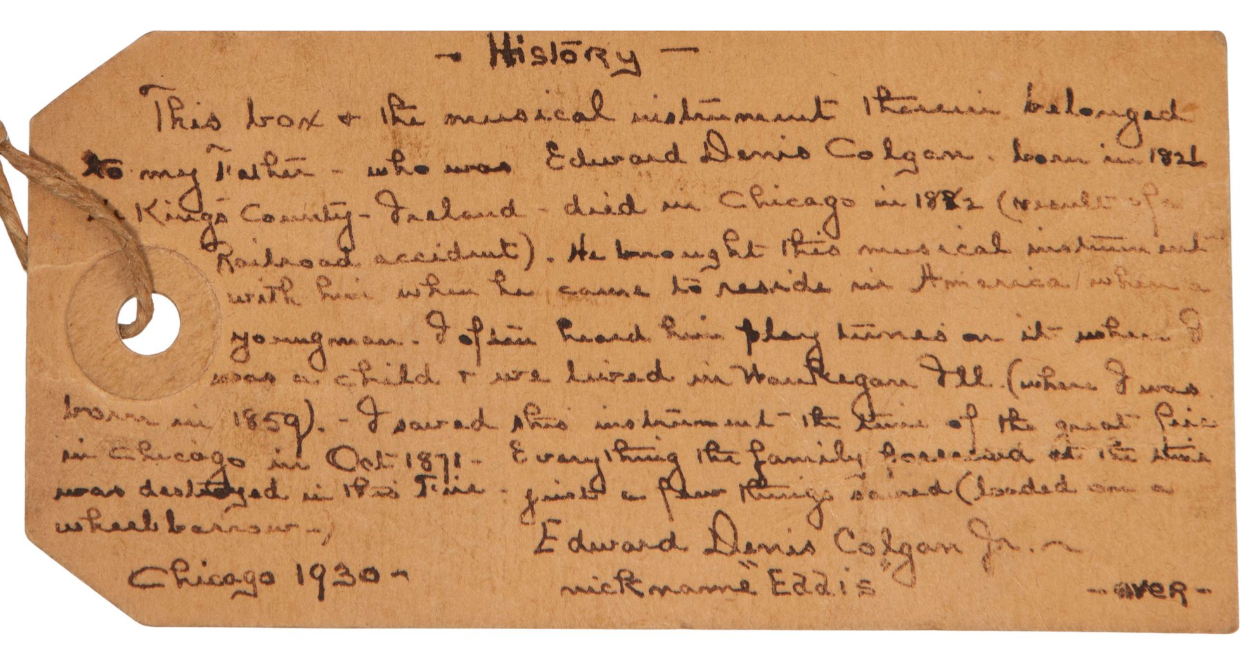
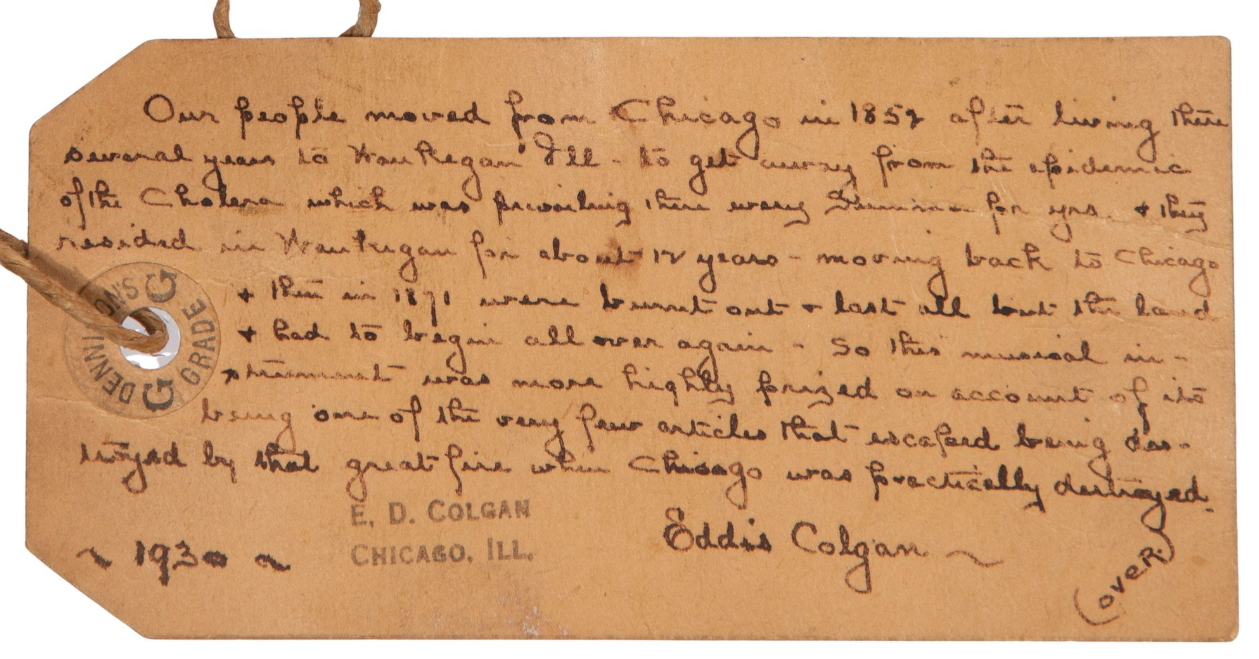
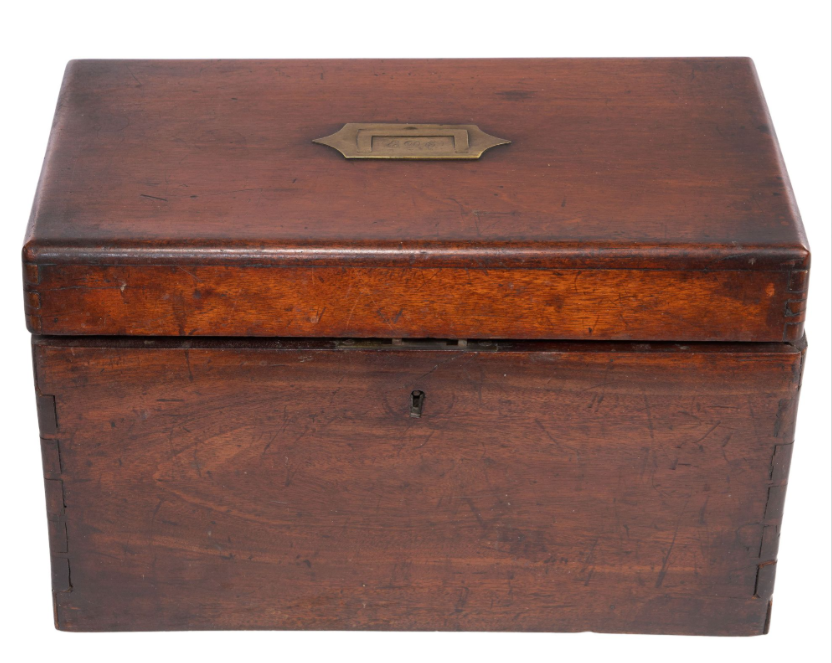
The son of the original owner preserved the history of the British valve cornet. He recorded it on a single paper tag, reproduced below. He also preserved the original deluxe case and the complete kit of parts, including mouthpipe shanks for B♭ and A, crooks for A♭ and G, and the mouthpiece.
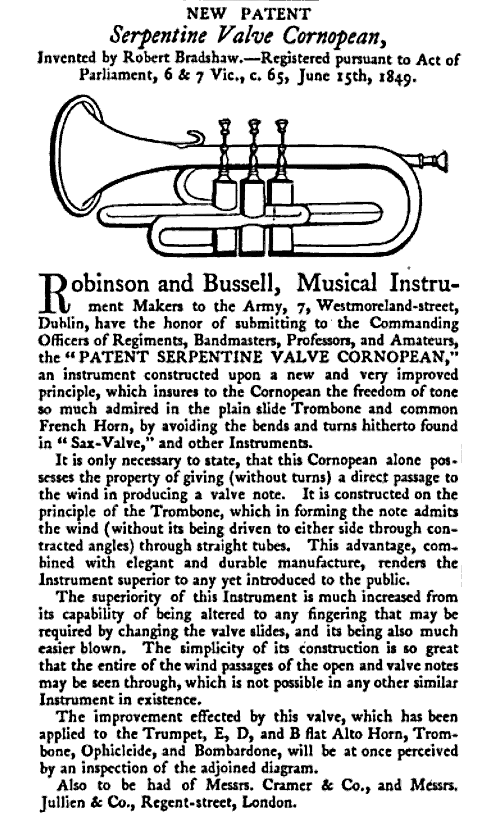
The last of Bradshaw’s three designs was registered on June 15, 1849, again by Robinson and Bussell.