Circular Pocket Cornets in Britain
By the late 19th century in England, circular cornets were often called "busker's bugles" but that was likely a slang term attached to them when they were out of fashion and not wanted by any but the peripatetic street musician. During the 1850s and 1860s circular cornets enjoyed a certain popularity when the later form was not ubiquitous.
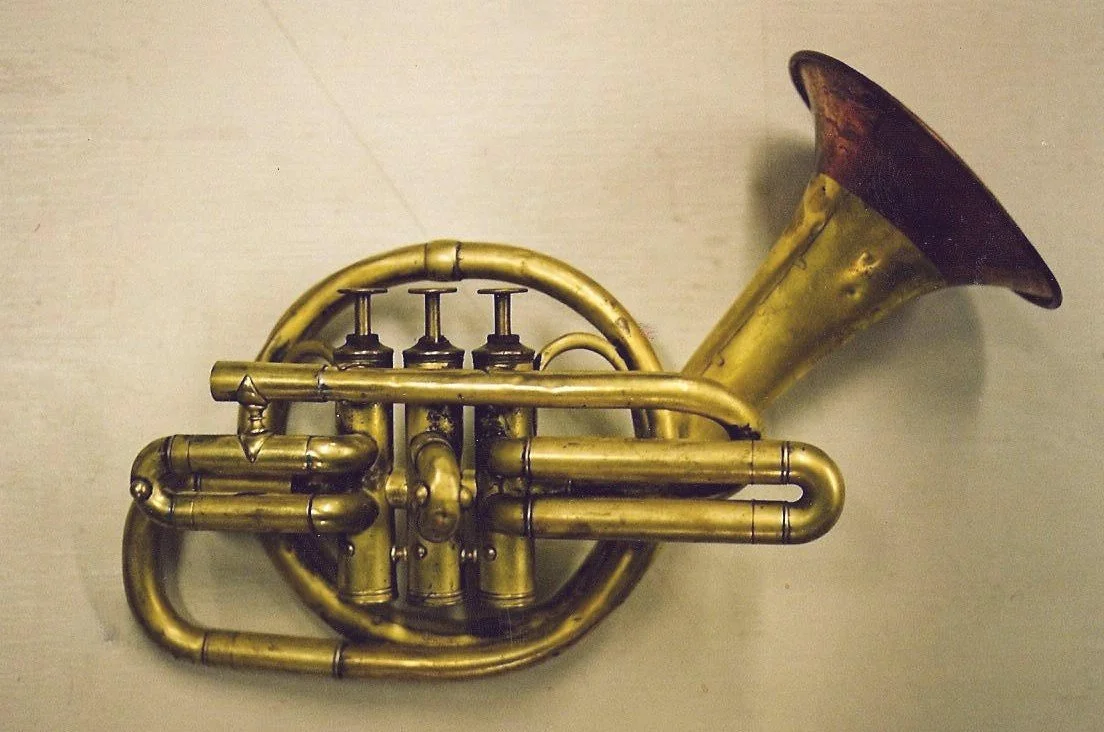
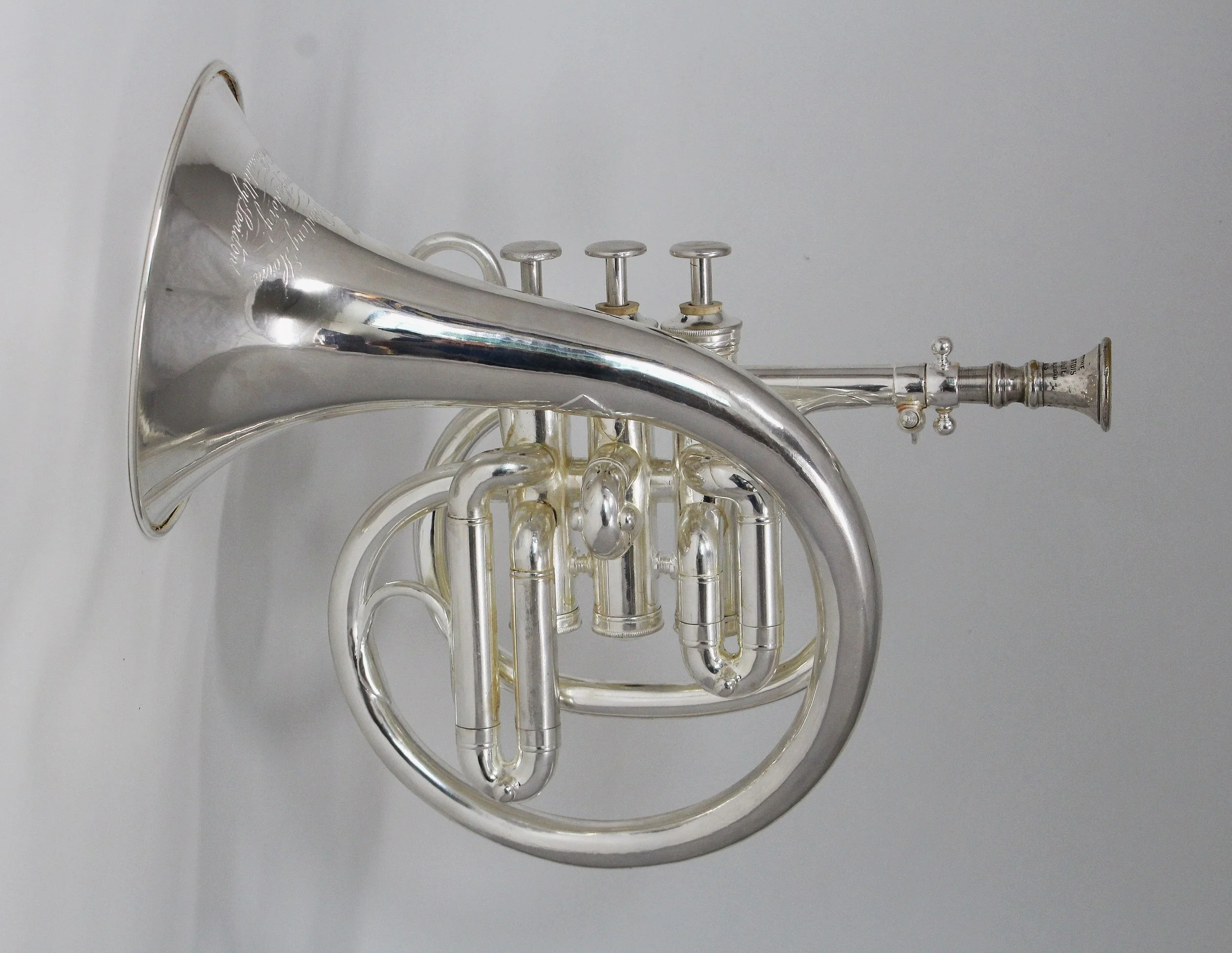
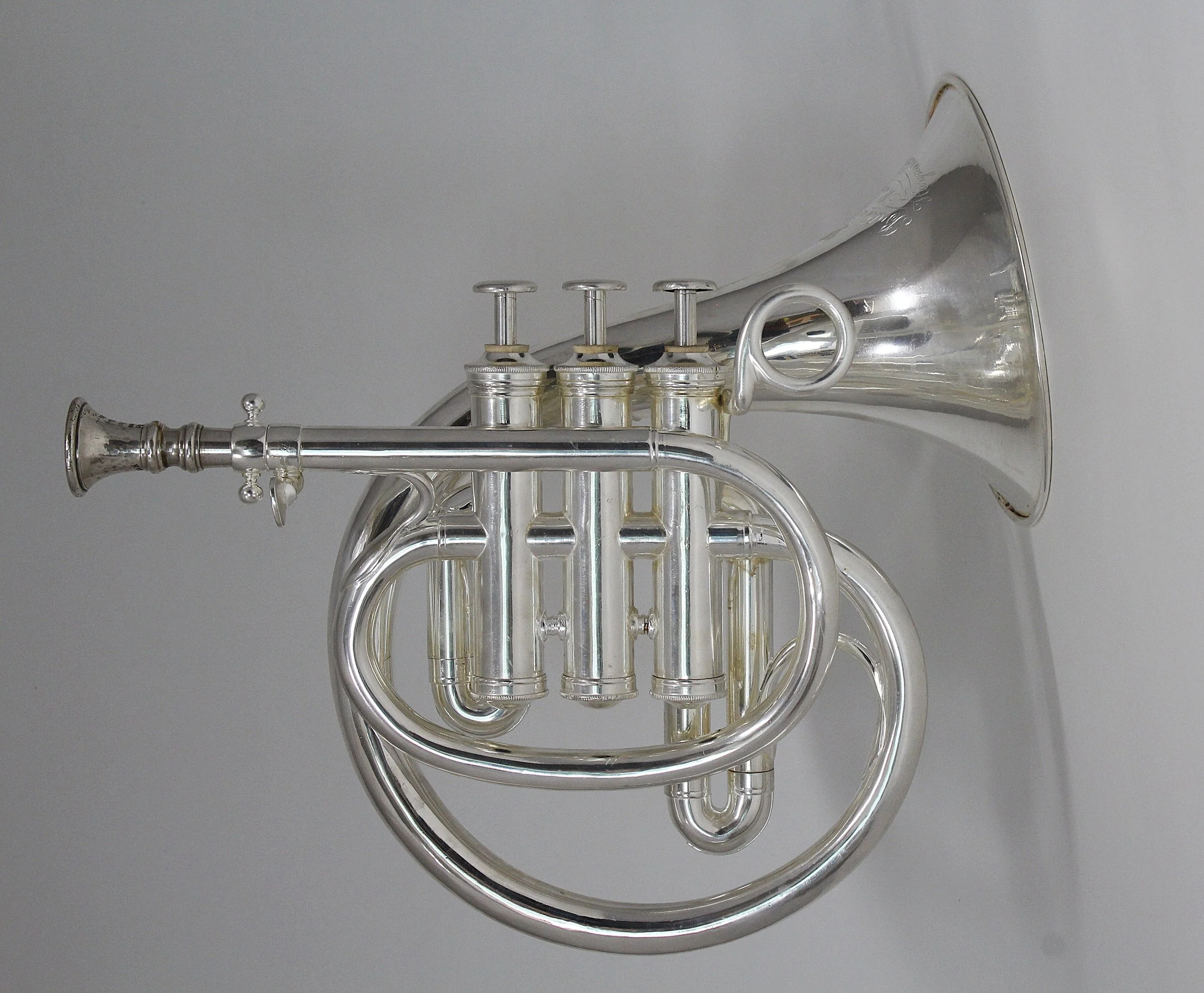
This example has the added novelty of being very compactly wound and with an oval bell rim making it possible to transport it in a coat pocket or small satchel. Judging by the somewhat rough and worn condition, it may very well have been the property of a street musician at one time.
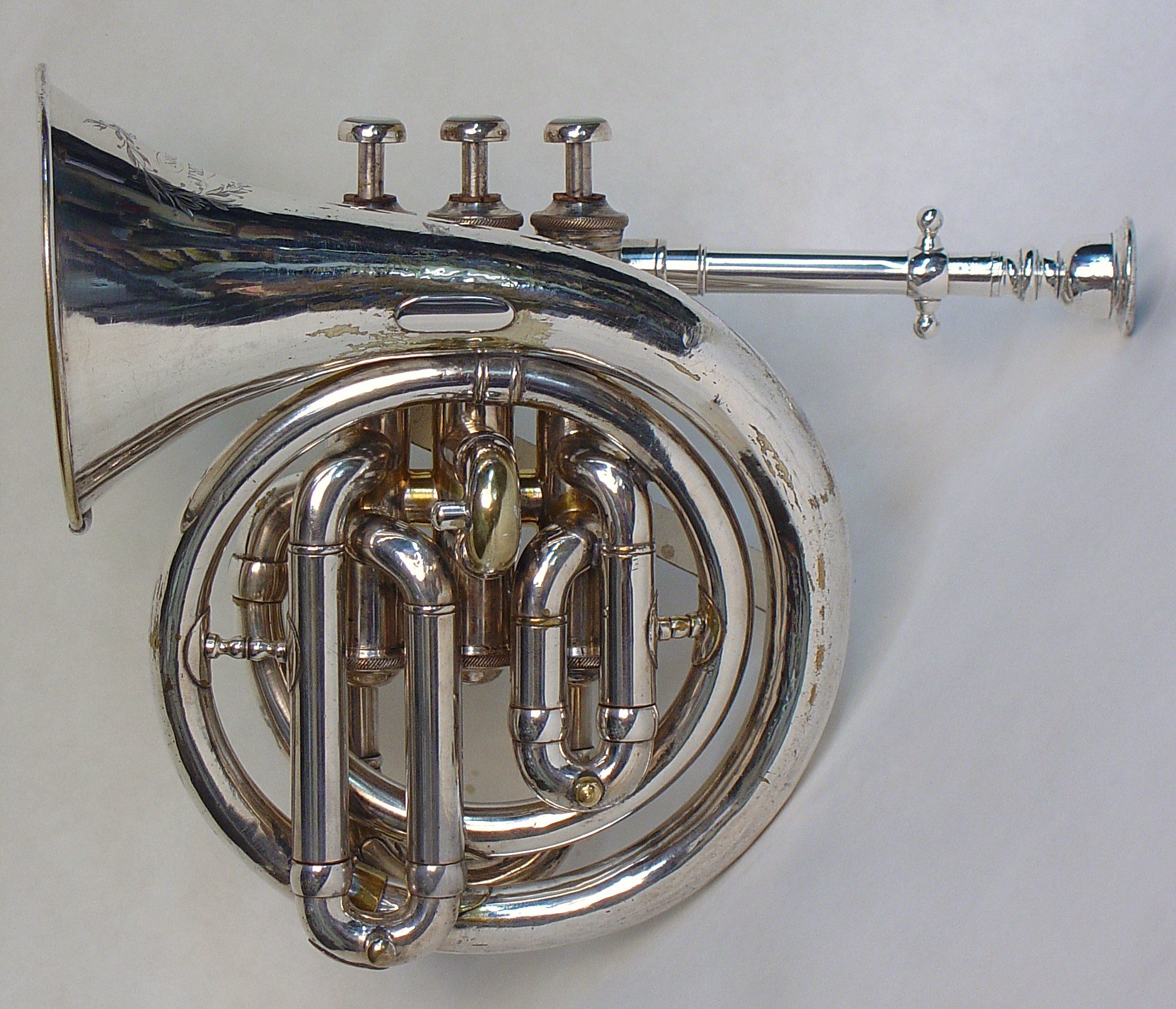
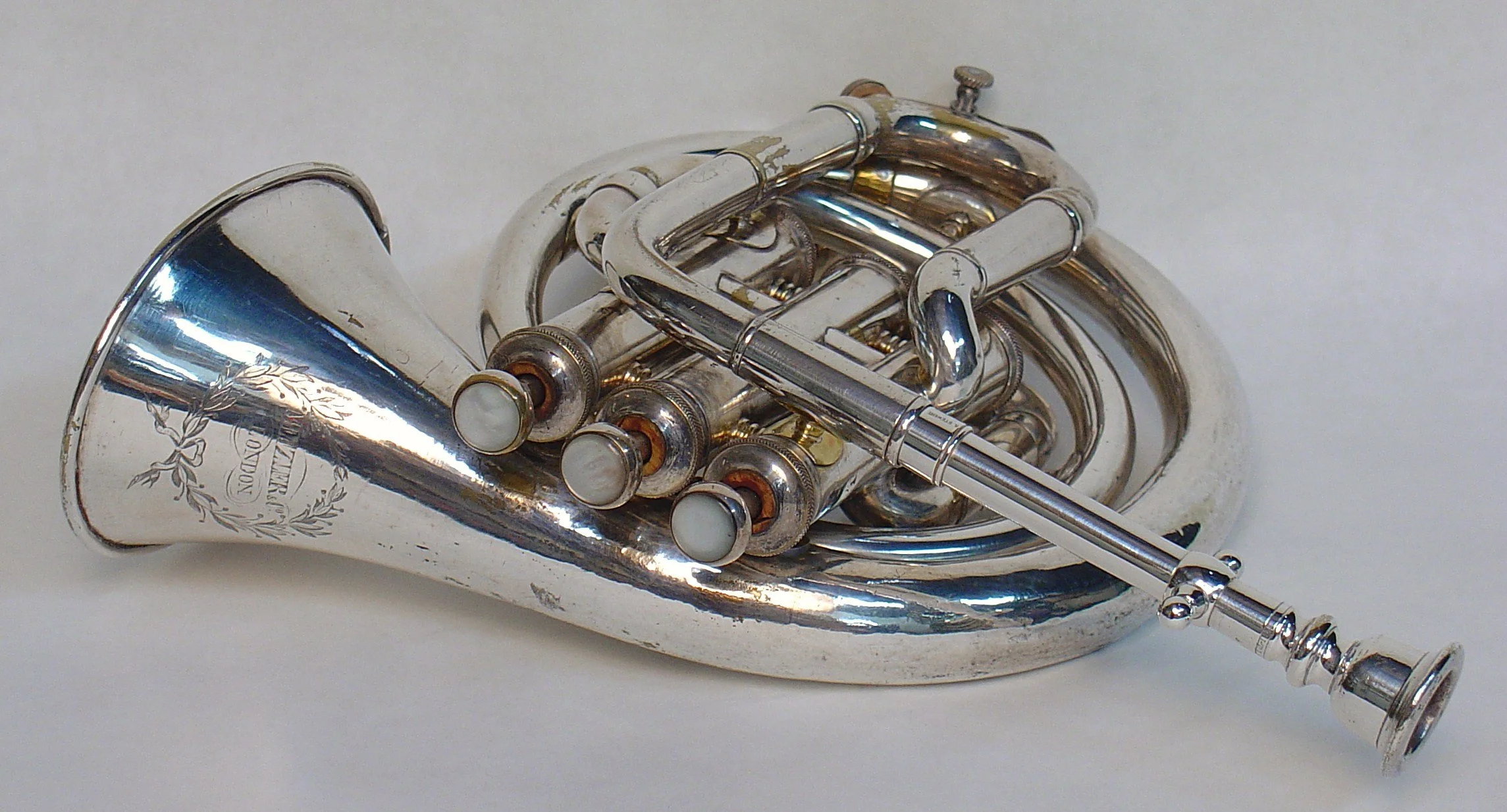
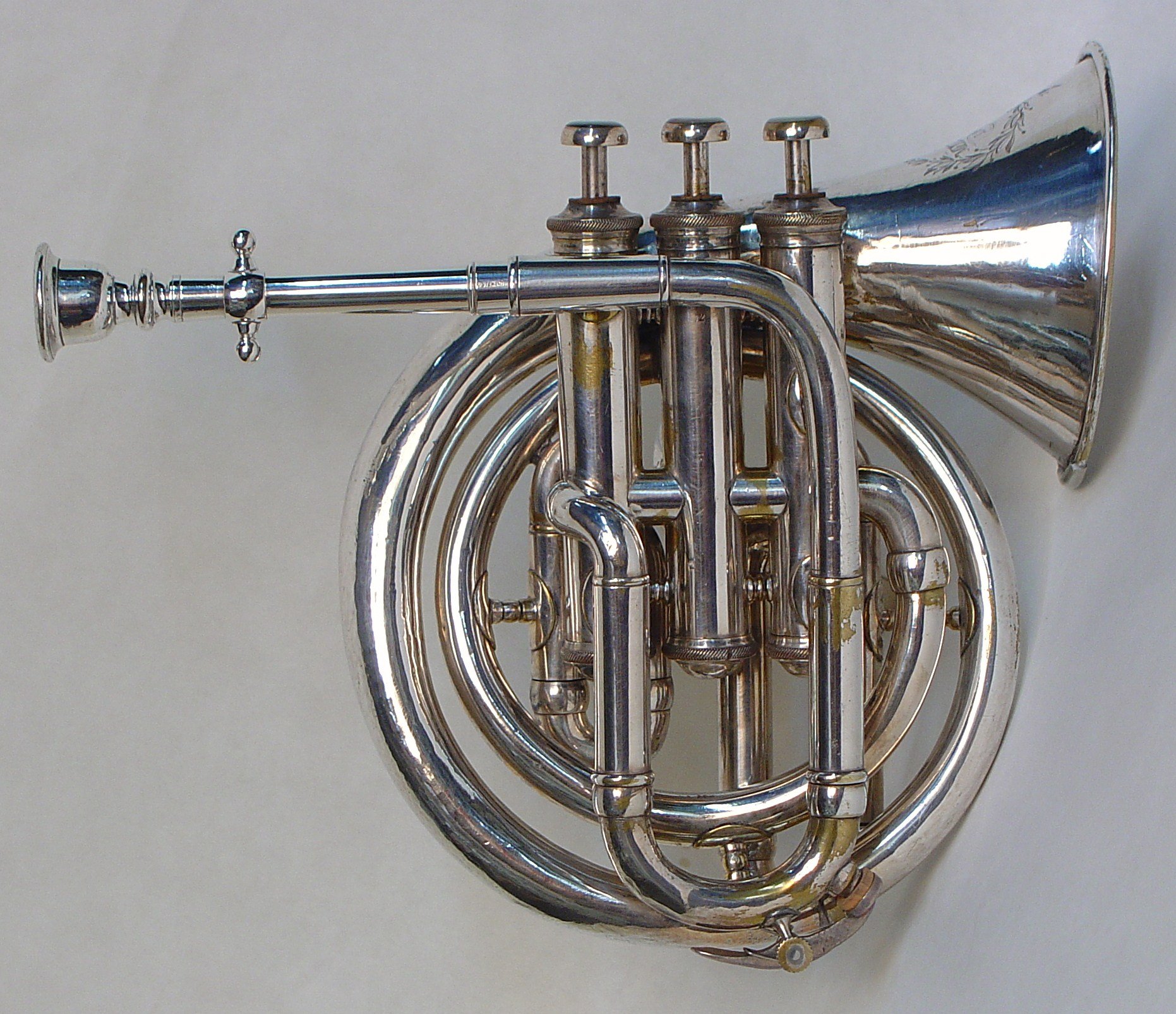
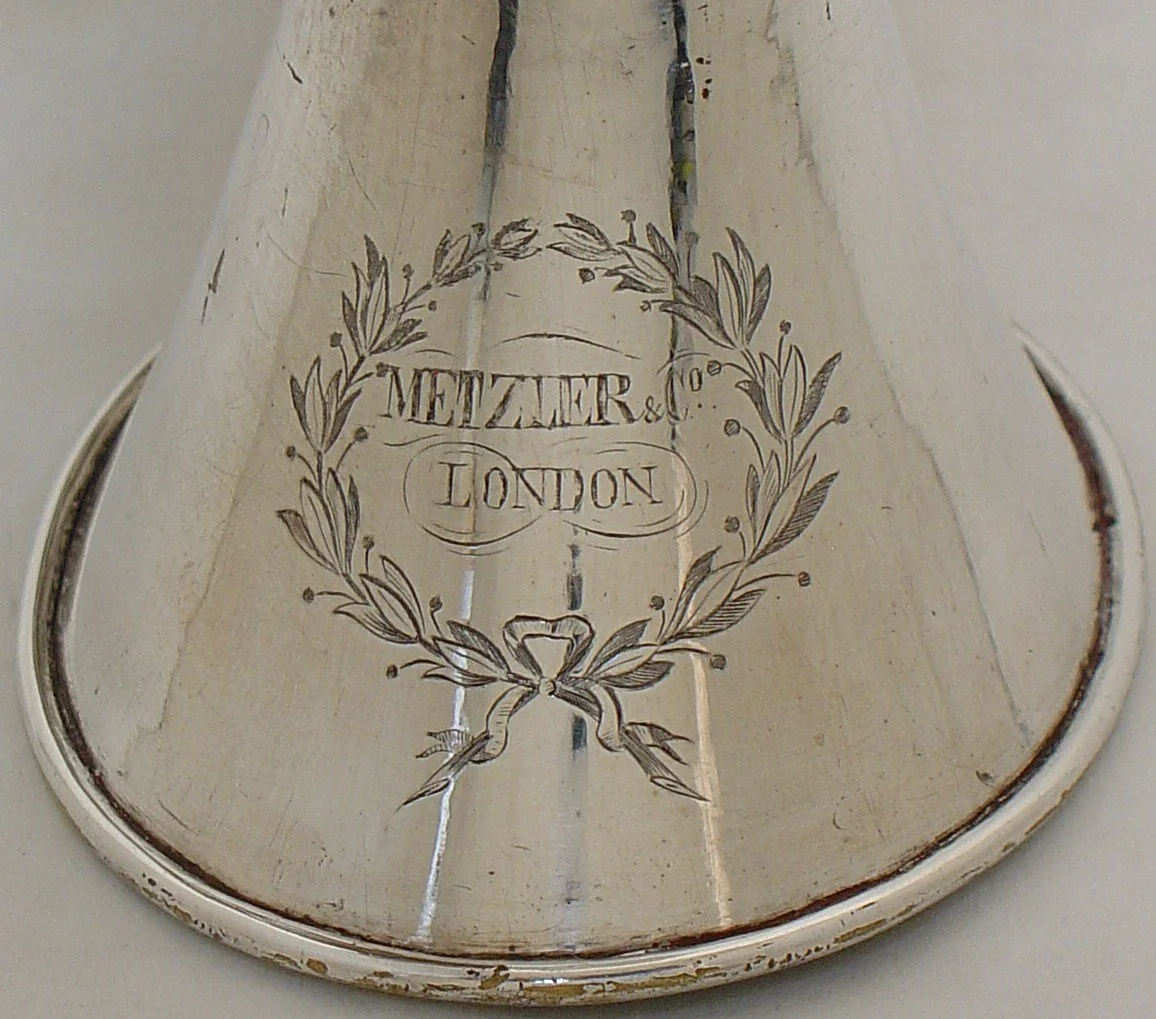
Metzler was a music merchant in London from the early 1830s and likely didn't manufacture brass instruments there. Other known instruments marked by Metzler include two other cornets like this one, a cornopean and keyed bugle but mostly flutes and clarinets. This cornet was most likely imported from France in the 1860s. It is 6 3/4" long with the shank removed, the bell rim measures 3 1/8" X 4 1/8" and the bore .449". It did not originally have a waterkey and the buttons, mouthpipe shank and mouthpiece are also replacements.
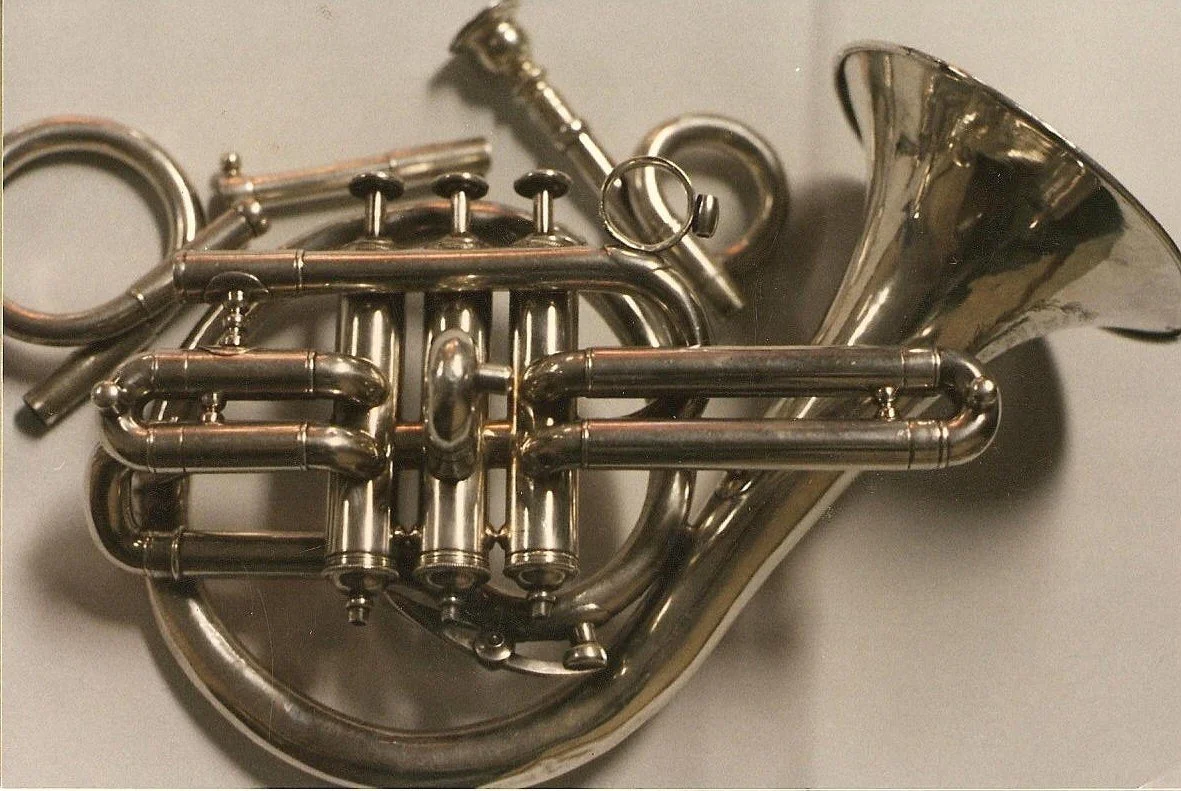
The next photo below shows a very similar cornet belonging to Mark Metzler (no known relationship). As similar as it is, it is obviously made by a different European maker as if Metzler shopped this design around.

Two Metzler circular pocket cornets for comparison.
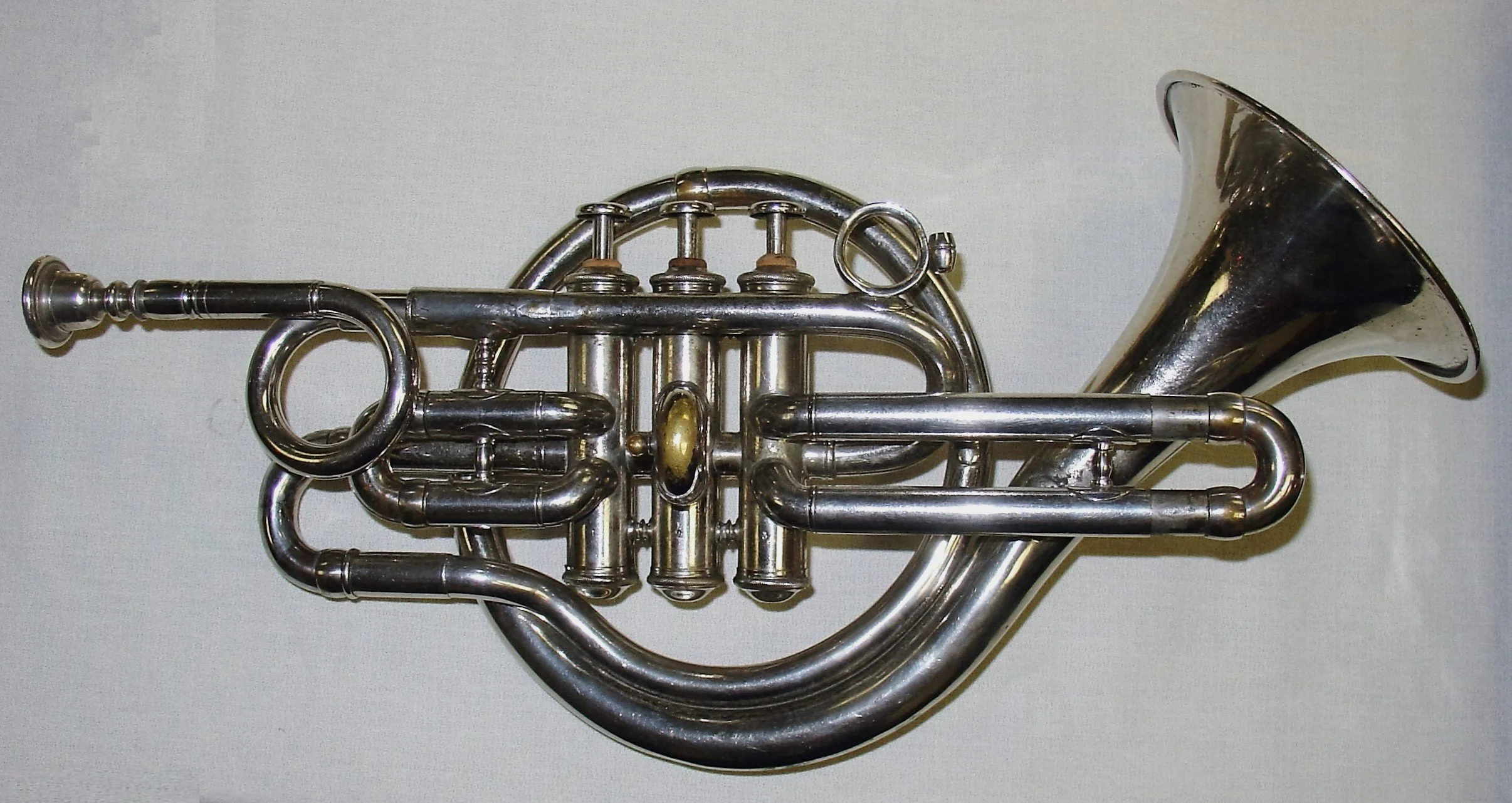
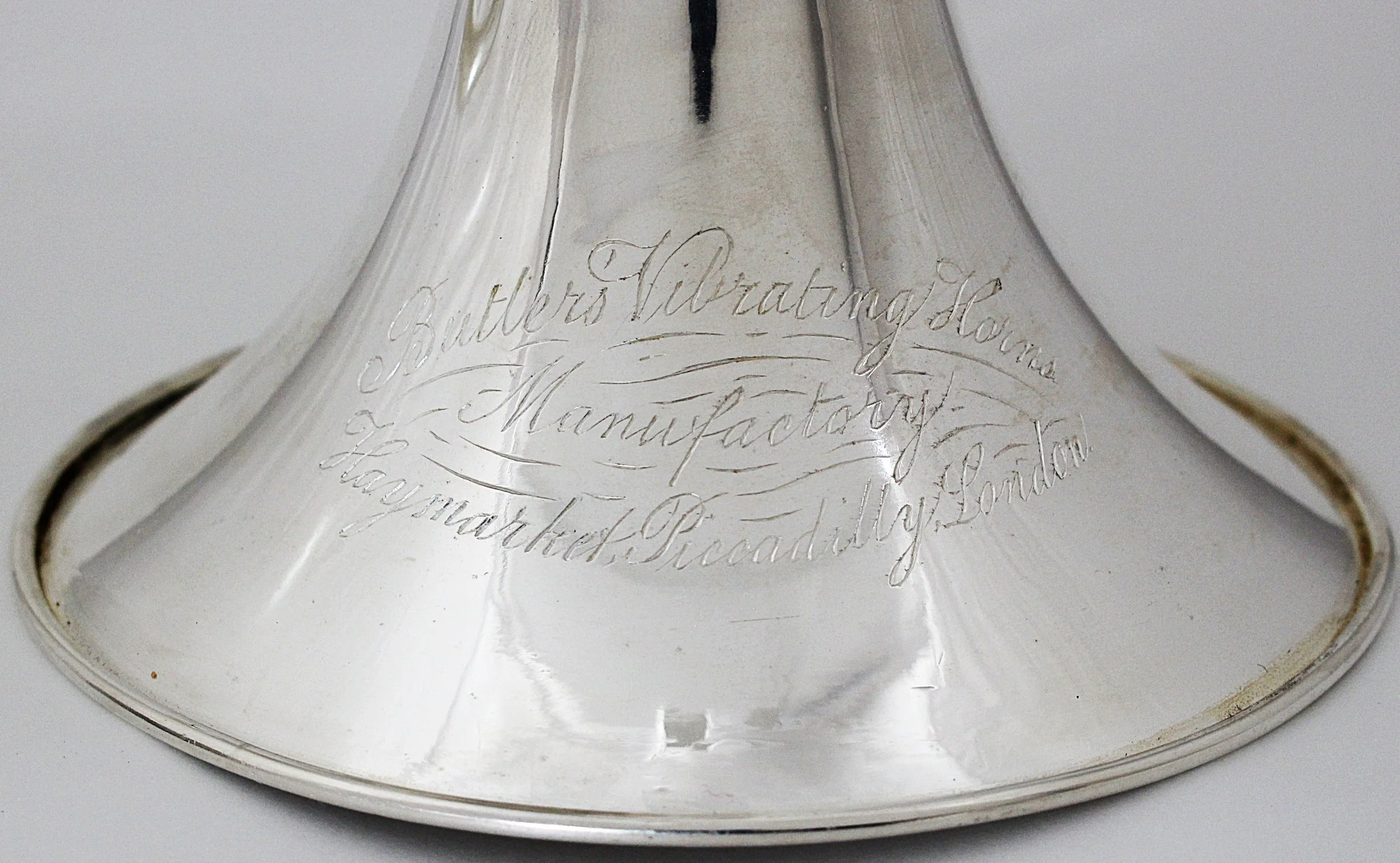
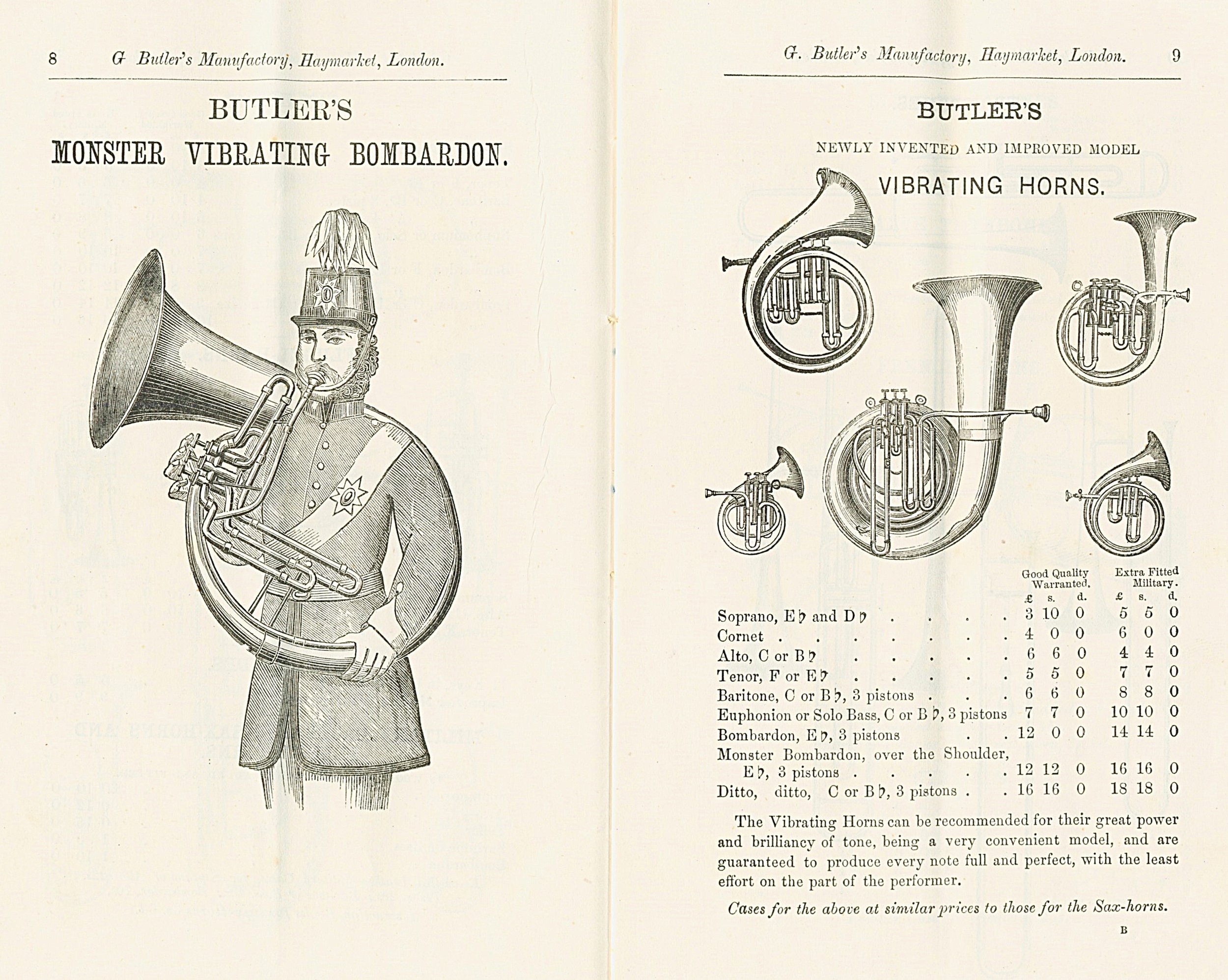
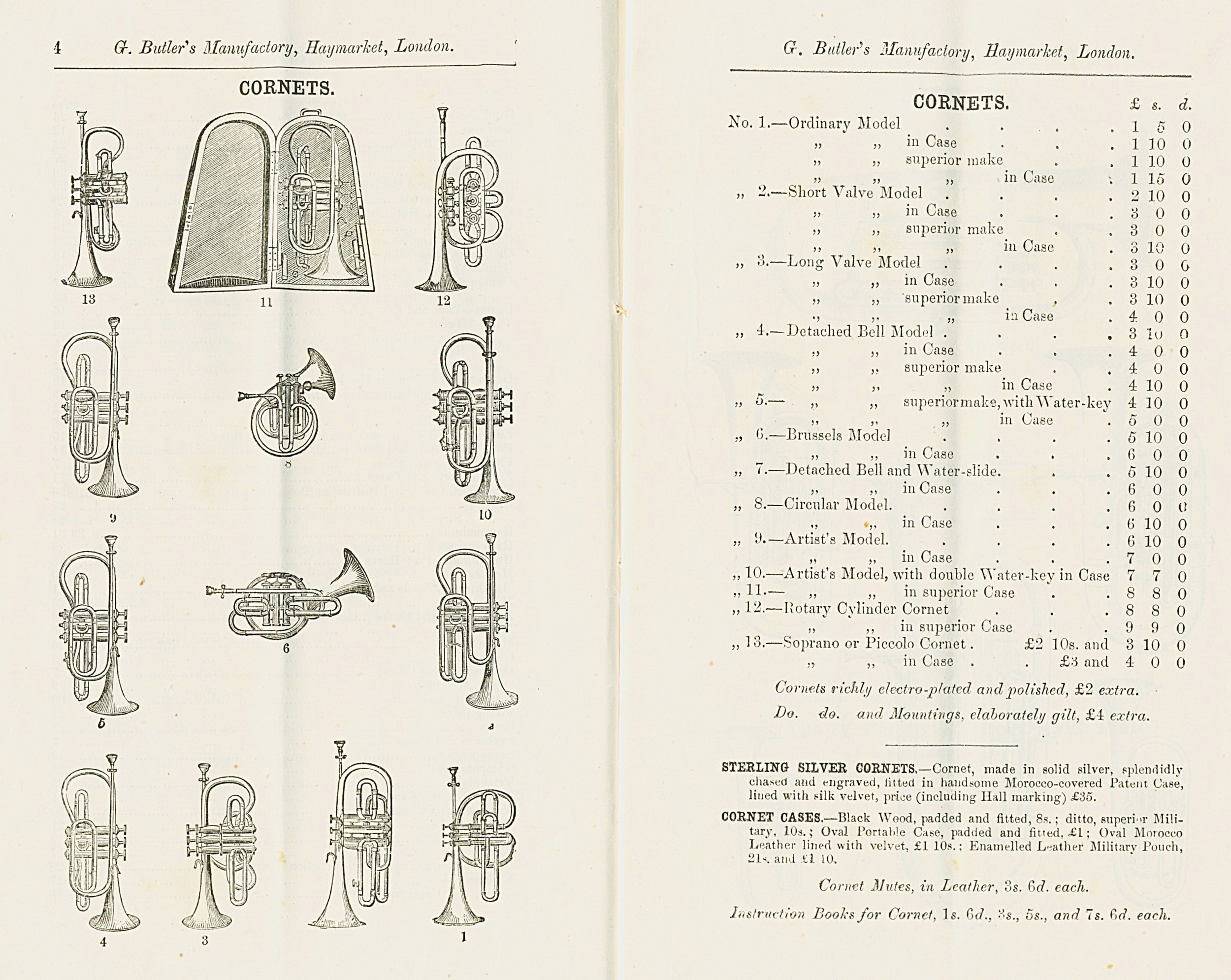
Circular cornets were made by other British makers including George Butler. George Butler Sr. was a Dublin maker, having succeeded one of the Dollard family of makers in 1826. George Butler Jr. established a branch facility in London in 1859. The instrument pictured below is the soprano of a family in this shape that was made by or for George Butler and given the fanciful name “Butler’s Vibrating Horns”. The family included all sizes and pitches as saxhorns, but only the soprano, Bb cornet (or alto) and Eb or F tenors were shaped with the bells at forward angles. The other intermediate sizes had bells straight up, parallel with the pistons. The largest Eb, C and Bb bombardons were similar to helicon tubas that had been produced in eastern Europe, although with the bell on the right shoulder, rather than left, pointing the bell in the opposite direction. Butler seems to have been capitalizing on the promotion of Henry Distin’s “families” of brass instruments, starting with “Sax Horns” in 1845, then “Euphonic Horns”, “Flugel Horns” and finally “Ventil Horns” in 1859. Butler’s intermediate size “Vibrating Horns” appear to be direct copies of Distin’s “Ventil Horns”. In the same catalog, Butler lists many other instruments copied from Distin and other makers, including another circular cornet, most commonly seen made by Gautrot in Paris. Butler calls it the “Brussels Model” cornet, which is also the name used by Distin in his 1857 catalog. Gautrot called this design “modèle papillon” (butterfly model). The fact that they are all so similar makes one wonder if they were all made by Gautrot.
Three examples of the “Brussels/Butterfly” model Bb circular cornets are pictured below. We don’t know what model name was used by Carl Boosé for his version, but Henry Smith took the horn family idea further with his “Barking Horns”.